
SAJC resources
The Marshmallow Experiment: What It Can Teach Intermediate Students About Discipline
Sri Amogha Junior College · Published 22 November 2026
By Nikhilesh Bharadwaj, Director, Sri Amogha Institutions
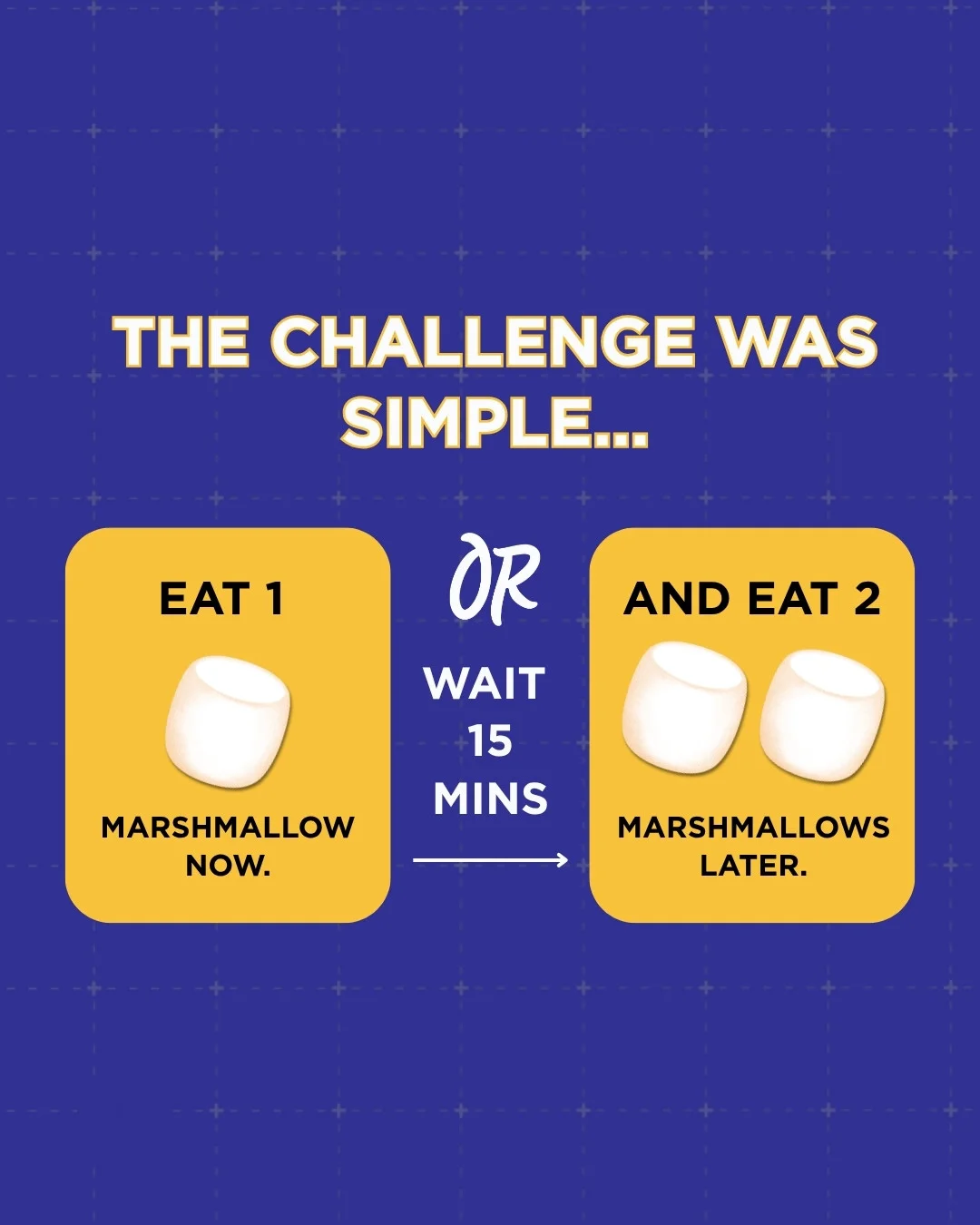
Imagine someone puts a marshmallow in front of you and offers a choice: eat one now, or wait 15 minutes and get two.
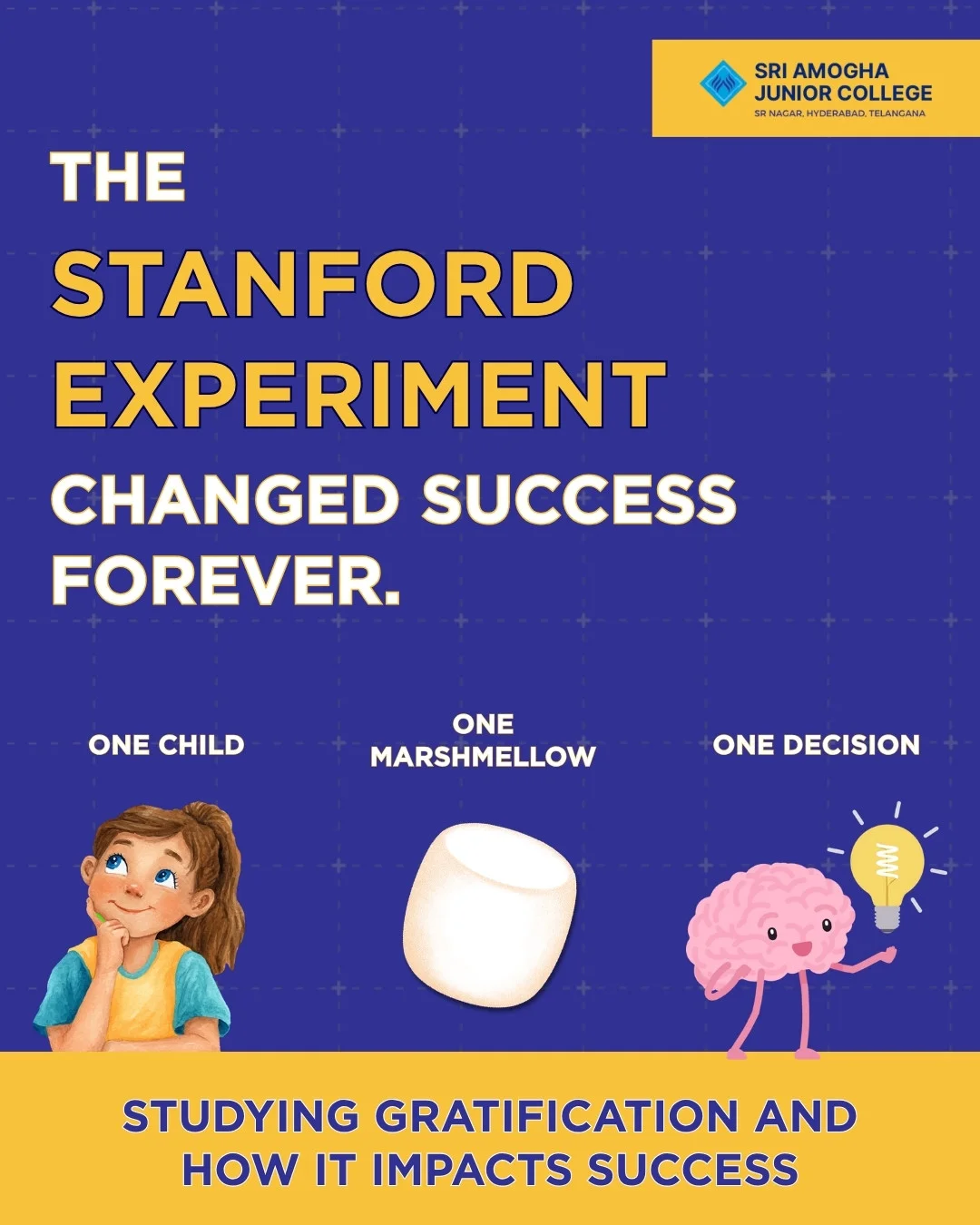
It sounds trivial. But that small test, run by psychologist Walter Mischel and his colleagues at Stanford from the late 1960s, became one of the most famous studies on self-control.
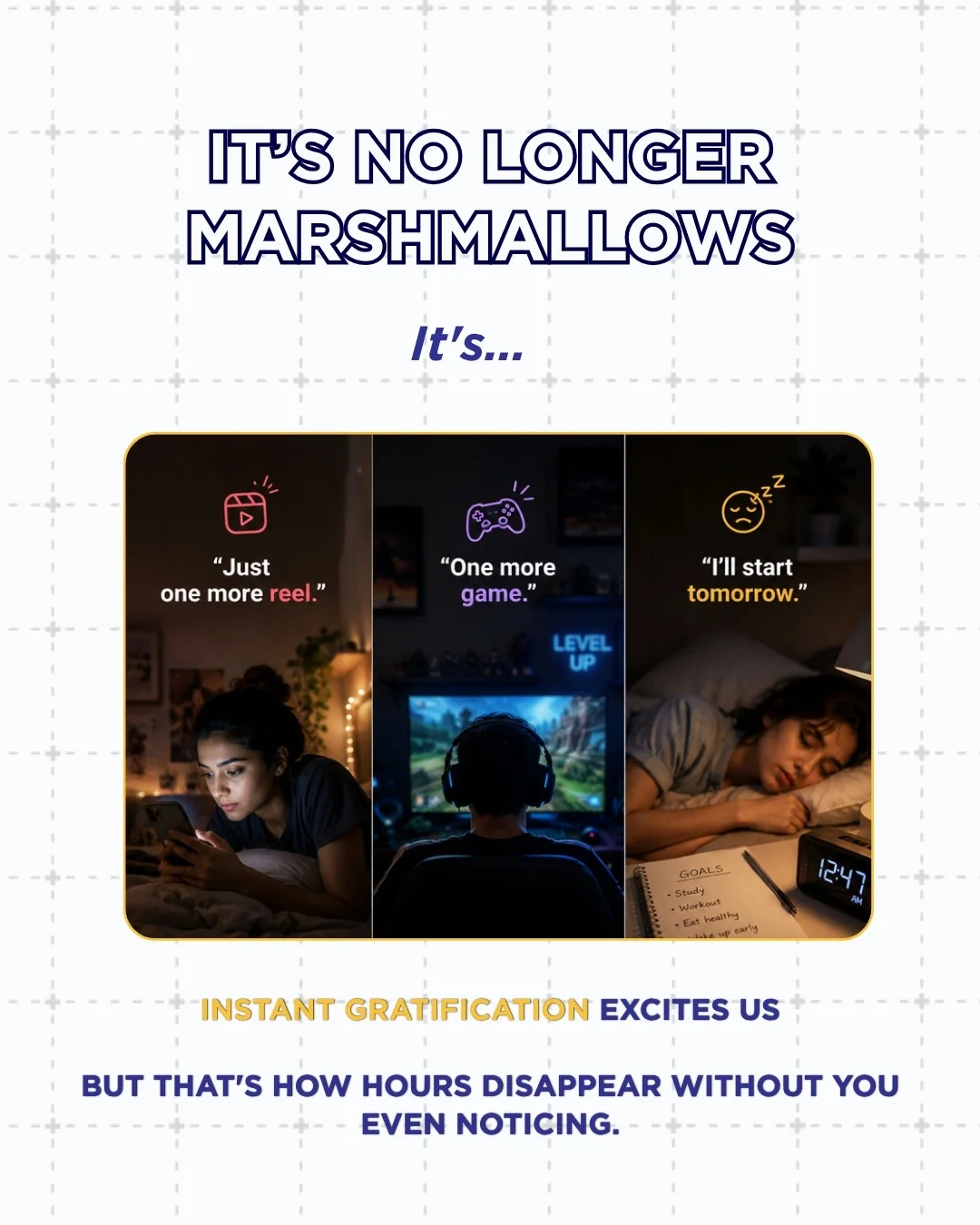
For an Intermediate student, the idea is surprisingly relevant. Because today, the marshmallow isn’t a sweet. It’s:
- a reel
- a video game
- a notification
- one more episode
- the thought, “I’ll study tomorrow”
What is delayed gratification?
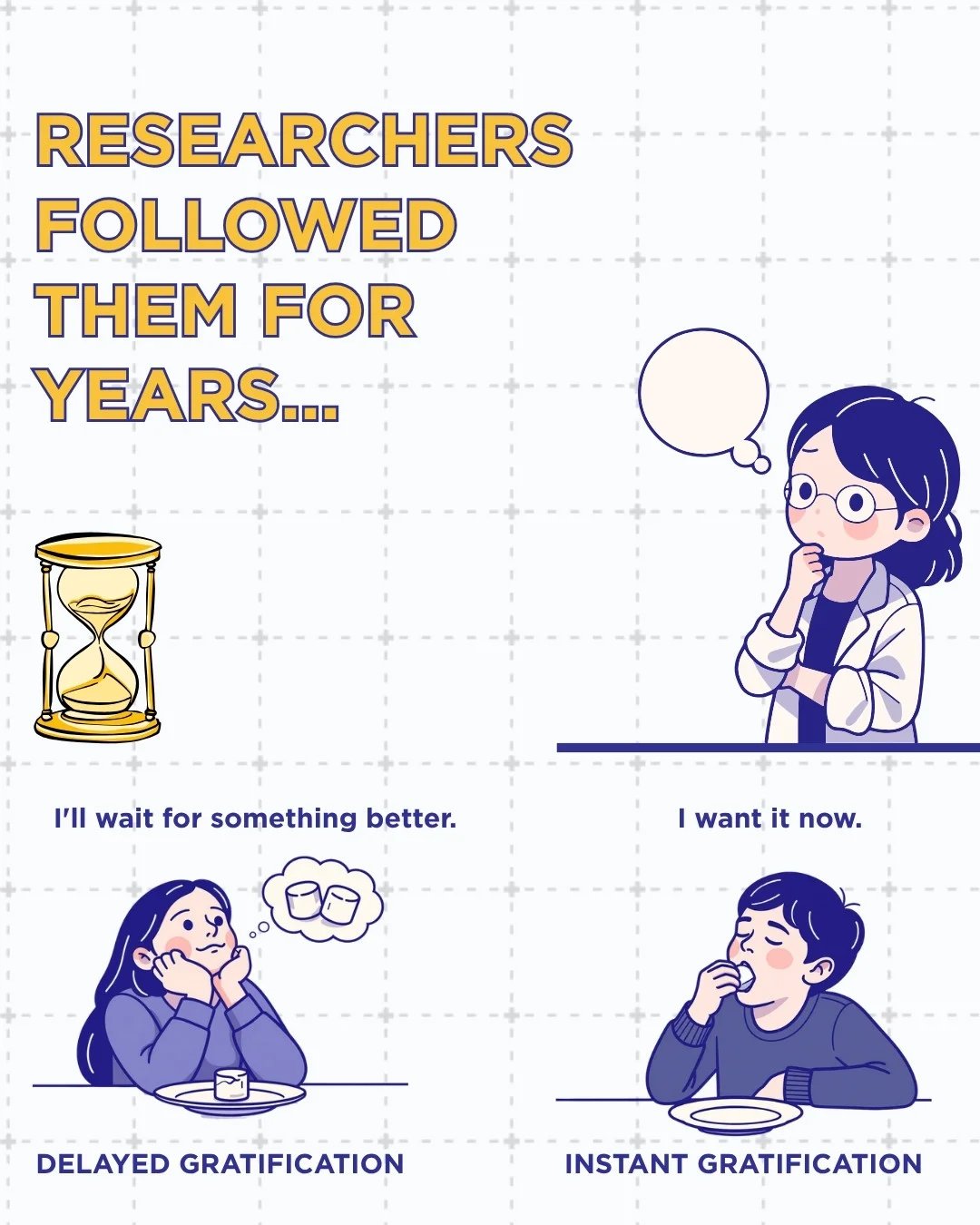
Delayed gratification means giving up a smaller reward now for a bigger one later.
| Now | Later |
|---|---|
| One hour of scrolling | One hour of prep that makes tomorrow’s test easier |
| Watching videos till 1 am | Sleeping on time and focusing in class |
| Skipping revision “just today” | A chapter you don’t have to cram before exams |
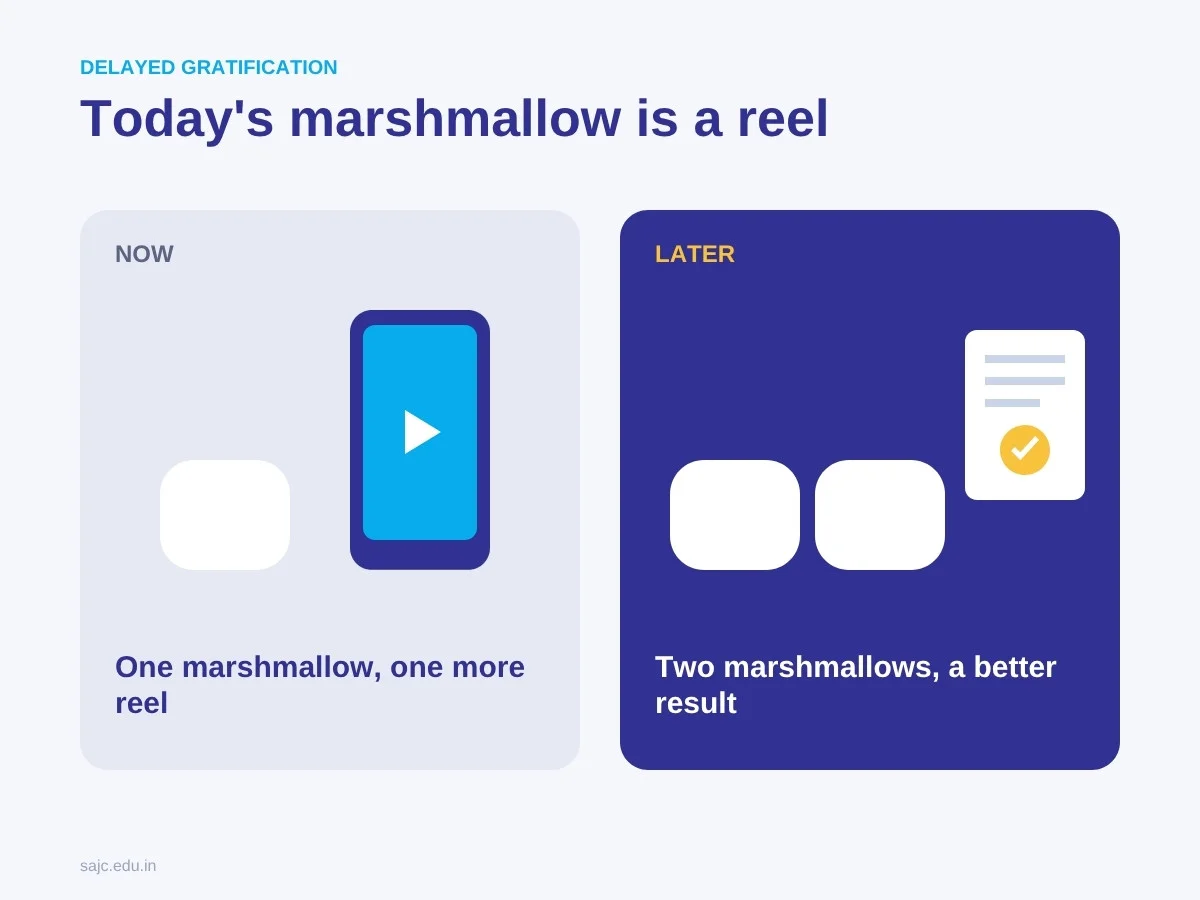
It isn’t about never having fun. It’s about deciding when fun comes first and when your goal does.






What the research really says
The original follow-ups found that children who waited longer tended to do better years later on measures like school performance. That’s the version most people repeat.
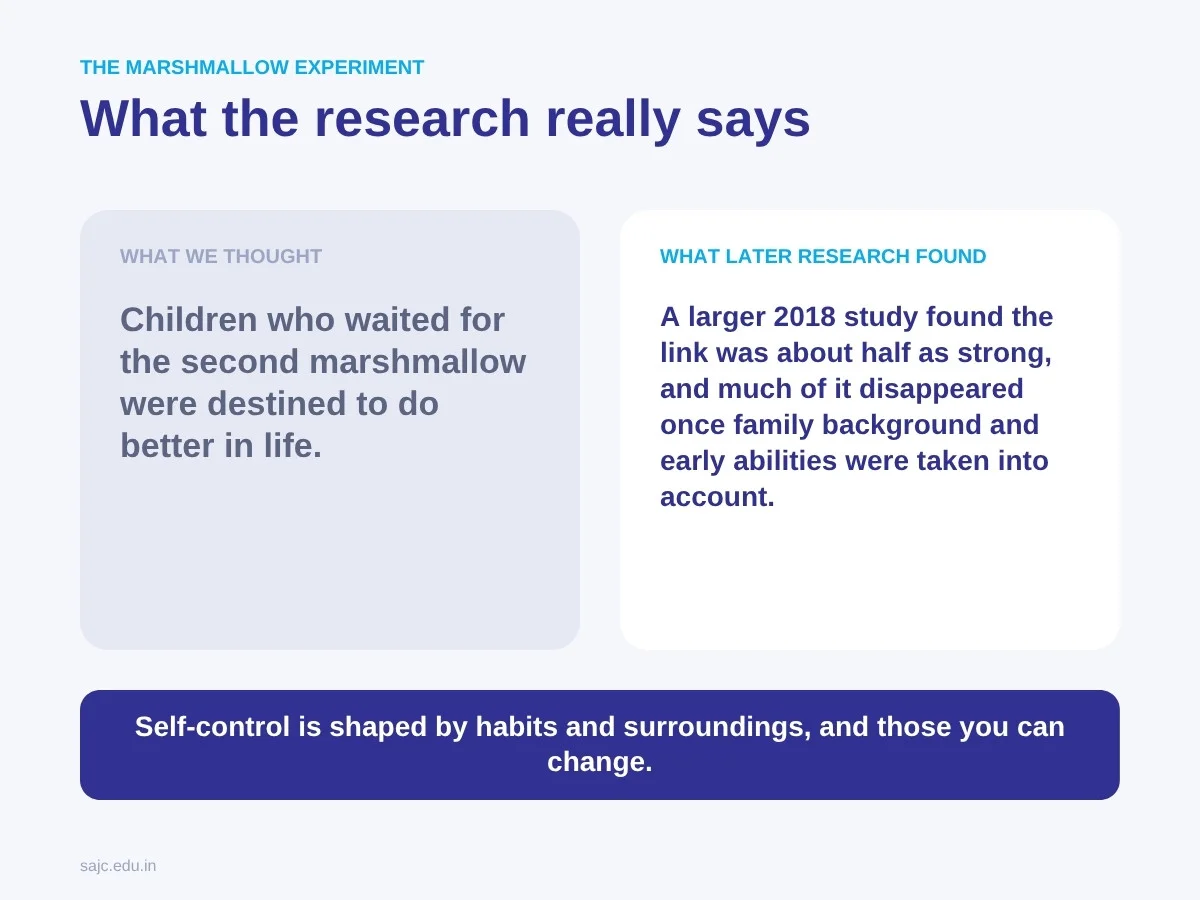
In 2018, researchers Tyler Watts, Greg Duncan and Haonan Quan repeated the study with a much larger and more diverse group of children. They found the link was about half as strong, and much of it disappeared once they accounted for family background and early abilities.
So the honest takeaway is not “kids who wait are destined to succeed”. It’s this: self-control is shaped by habits and surroundings, not just personality. That’s good news, because habits and surroundings are things you can change.
The modern marshmallow is everywhere
Students today don’t wait for entertainment. Entertainment waits for them. Open Instagram, there’s another reel. Open YouTube, another recommendation. Start a game, another level.
None of this is automatically bad. The problem is that these apps are designed to be easy to continue.
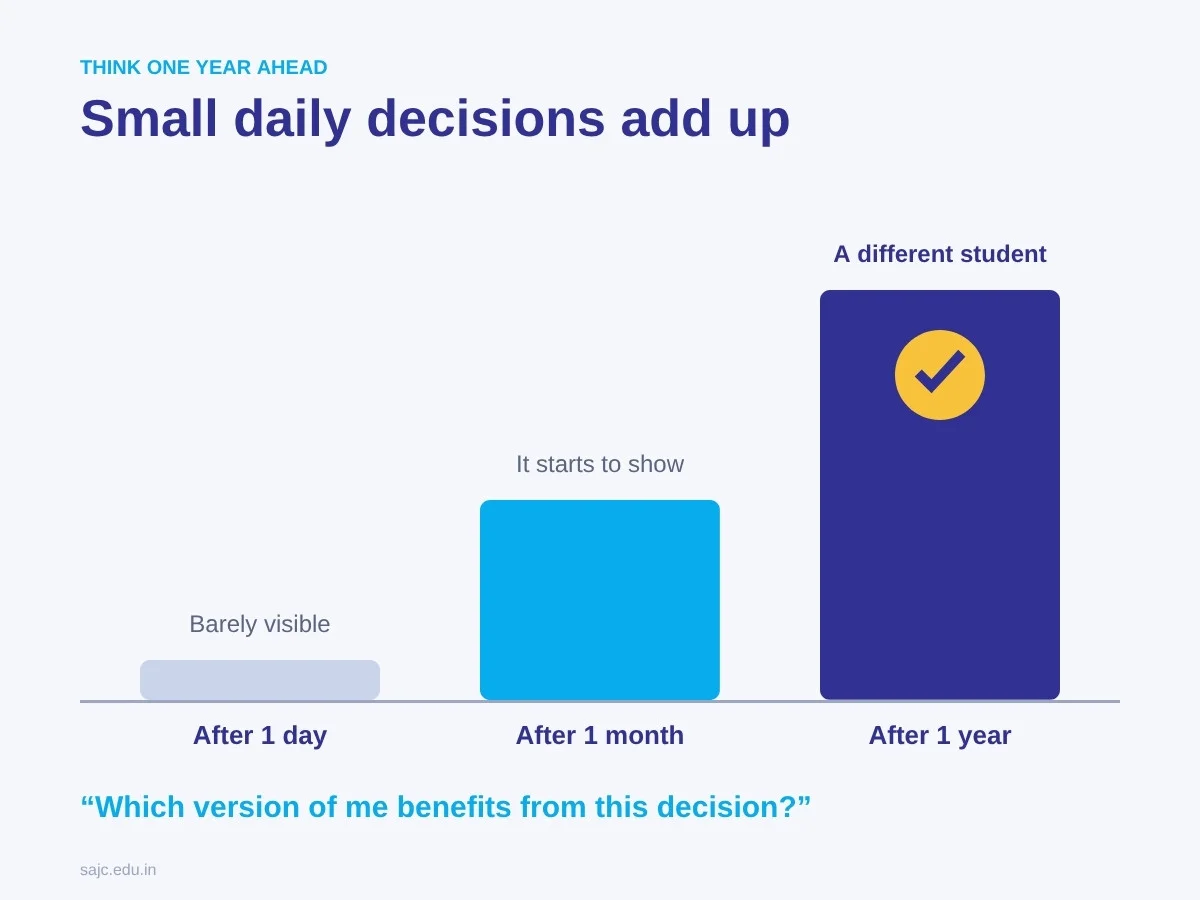
The gap between a student who studies consistently and one who keeps postponing isn’t visible after one day. After a month, it shows. After two years, it can be enormous.
Discipline isn’t about being miserable
Being disciplined doesn’t mean no games, no friends, no social media. That isn’t realistic or healthy. The better question is:
“Have I earned my distraction?”
- Finish the chapter. Then use your phone.
- Complete today’s important problems. Then play.
- Prepare for tomorrow’s test. Then watch something.
The reward feels better when it isn’t sitting on top of unfinished work.
4 tools that make waiting easier
Mischel’s own research found that children who distracted themselves or hid the marshmallow waited longer. Willpower works better when you design your surroundings.
- Hide the marshmallow. Phone in another room during study blocks. Out of sight genuinely helps. (Here’s why multitasking fails.)
- Use if-then plans. “If it’s 6 pm, then I start Maths.” “If I want to open Instagram, then I finish one more question first.” Pre-deciding removes the daily negotiation.
- Shrink the first step. “Study Chemistry” is vague. “Solve 5 questions” is easy to start.
- Make the later reward visible. Write tomorrow’s test date on your desk. Picture the version of you walking out of the exam hall.
For more on planning your day, see our guide to time management for Intermediate students. Worried about gaming specifically? Read gaming: how much is too much?
Think one year ahead
Students often think in immediate terms: “I’ll study later.” “There’s plenty of time.” “I’ll get serious before exams.”
Try a different question. Instead of “What do I feel like doing right now?”, ask:
“Which version of me benefits from this decision?”
The student who studies today doesn’t feel very different tonight. But a year of those small decisions produces a very different student. (Here’s what a well-planned year looks like in Inter 2nd year.)
Frequently asked questions
What is the marshmallow experiment?
A series of studies from the late 1960s in which young children chose between one treat now or two if they waited. Researchers then looked at how the children did years later.
Was the marshmallow experiment proven wrong?
Not exactly. A larger 2018 study found the link to later achievement was weaker than first reported and largely explained by family background and early abilities. The idea of delayed gratification still holds; the claim that one test predicts a child’s future doesn’t.
How can students build self-discipline?
Change the environment (phone away), pre-decide with if-then plans, make tasks small enough to start, and keep the long-term goal visible.
We’ve also written about instant vs delayed gratification if you’d like to go deeper.
The real lesson
Delayed gratification isn’t about rejecting the present. It’s about putting things in the right order. Study first, relax after. Build the habit now, enjoy the results later.
Success in Intermediate rarely comes from one extraordinary day. It comes from hundreds of ordinary decisions, and sometimes the most important one is simply: “Not now. After I finish what matters.”
References: Mischel, Shoda & Rodriguez (1989), Delay of Gratification in Children, Science. Watts, Duncan & Quan (2018), Revisiting the Marshmallow Test, Psychological Science (summary by the Association for Psychological Science).