
Botany and Zoology
Study living organisms and biological systems. Careful observation, understanding and recall work together.
BiPC Intermediate · Hyderabad
Study Botany, Zoology, Physics and Chemistry through IPMED. Prepare for NEET-UG and relevant EAPCET routes while exploring medicine, healthcare and other biology-based courses.
The subject combination
Choose with a view of the subjects, the effort they require and the future routes you want to keep open.
Study living organisms and biological systems. Careful observation, understanding and recall work together.
BiPC also asks for conceptual reasoning and numerical work. A medical or life-science ambition needs preparation across these subjects.
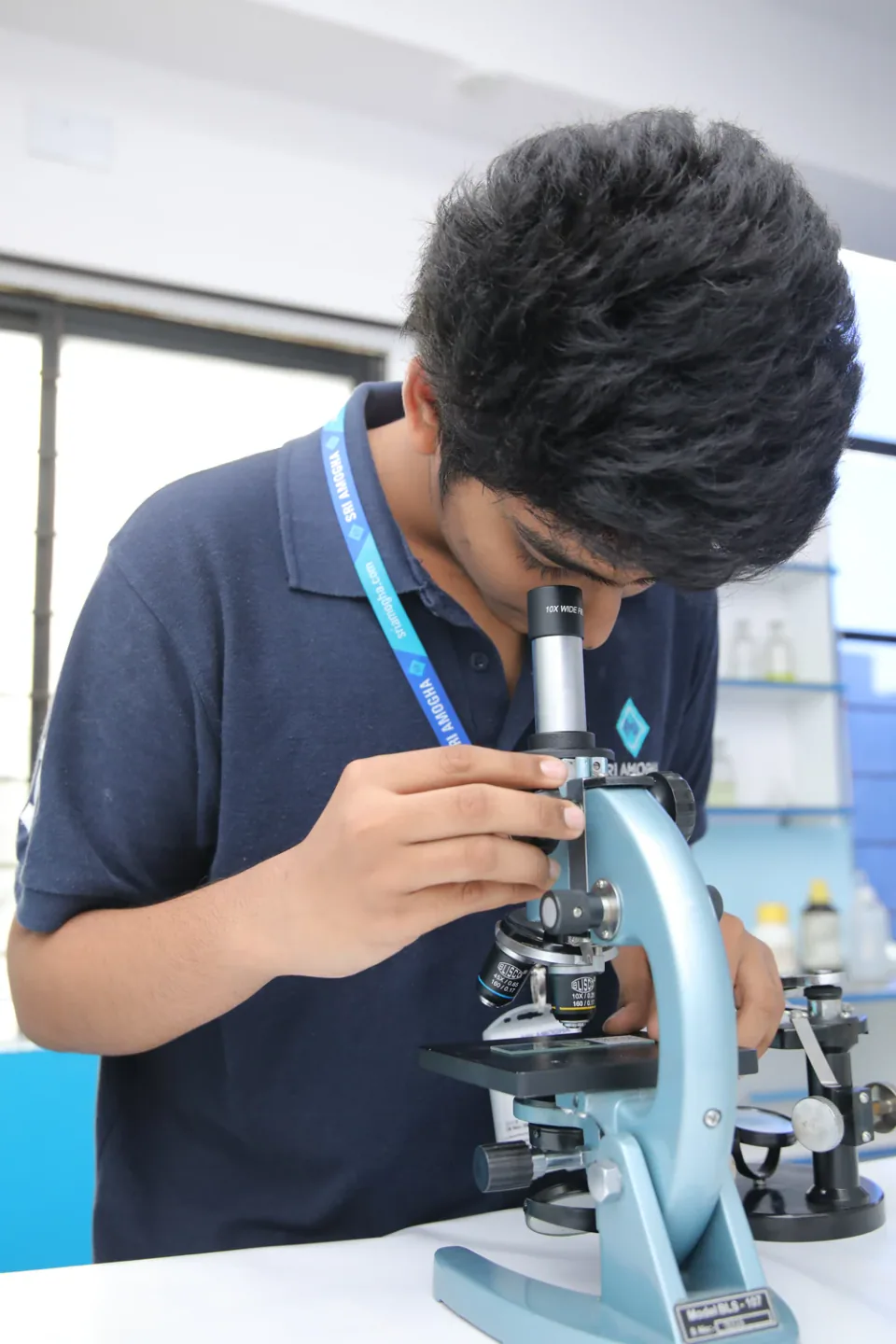
Laboratory work connects concepts with what you can observe, compare and explain. Ask to see the current practical learning spaces during your visit.
The SAJC programme
Intermediate BiPC with preparation for NEET-UG and relevant state agriculture and pharmacy entrance pathways. Medicine, allied health and life sciences have different entry requirements; discuss your intended degree before choosing.
Career options after BiPC
How do we keep people healthy, develop medicines, grow better food or understand living things? BiPC helps you explore these questions. Medicine is one route. Nursing, pharmacy, allied health, agriculture and life sciences offer other directions to consider.
Open a field below to see the study options and questions to check.
Understand illness, care for patients and develop clinical judgement.
Further study: MBBS, required internship/registration and later specialisation where chosen.
NEET-UG and applicable admission/counselling rules apply. EAPCET does not replace NEET for MBBS.
Work with oral health, clinical procedures and patient care.
Further study: BDS, required internship/registration and optional further study.
NEET-UG and applicable admission/counselling rules apply.
Combine scientific knowledge with hands-on care and communication.
Further study: B.Sc Nursing or another recognised nursing pathway.
Check current PCB/English, marks, age, entrance and registration requirements for the chosen route.
Explore how medicines are developed, assessed and used responsibly.
Further study: B.Pharm, PharmD or another appropriate approved pharmacy course.
Choose a recognised programme; course, state and institution rules apply.
Explore the science and technology supporting diagnosis and treatment.
Further study: Relevant laboratory technology, imaging, optometry or other allied-health degrees.
These are distinct professions with separate training, recognition and entry rules.
Help people improve movement, function and everyday independence.
Further study: BPT or a suitable recognised rehabilitation degree.
Clinical/rehabilitation roles need the relevant professional training and current admission route.
Investigate cells, microbes, molecules and biological applications.
Further study: Biotechnology, microbiology, biochemistry or related science degrees.
Research roles often need postgraduate training; some programmes require Mathematics.
Explore food production, plant/animal health and sustainable biological systems.
Further study: Agriculture, horticulture, food science, fisheries or veterinary degrees.
Agriculture, food science and veterinary courses have different entry routes. Check which examination applies to the course and state you choose.
Study how food, behaviour and community conditions influence wellbeing.
Further study: Nutrition/dietetics or related study; public-health specialisation where appropriate.
Specialist and clinical roles need the relevant qualifications; a general degree alone is not a clinical licence.
Explore how people think, learn, develop and respond to life.
Further study: An eligible BA/B.Sc Psychology route and further specialist study.
Students from other streams can also study Psychology. Clinical psychology needs recognised professional training beyond a general degree.
A conversation from Safar
Hear professionals discuss this field at SAJC’s Safar 1.0, recorded in 2023. 58-minute discussion.
Watch the discussion on YouTube ↗ About Safar →These are some possibilities to explore, not a complete list. Many careers welcome students from more than one stream. Degree choices, entrance eligibility, further training and interests shape the next step.
Visit SAJC with a parent or guardian. Our counselling team can help you compare subjects, courses and entrance routes, and explore more options based on your interests.
Meet our counselling teamSAJC conversations

YouTube loads when you choose. Its privacy terms apply.
An introduction to the choices open to BiPC students, with medicine, psychology, biotechnology and pharmacy among the directions signposted by SAJC.
Recorded in 2025. The earlier programme name CPMED may appear in this film. The current BiPC programme is IPMED.
Film details & related reading → Watch on YouTube ↗
YouTube loads when you choose. Its privacy terms apply.
An archived panel from Safar 1.0, the career conclave SAJC organised with Global Shapers’ Hyderabad Hub on 5 February 2023. This discussion focuses on healthcare and biosciences.
This is a college archive film. For current programmes and inclusions, refer to the programme pages or speak with the admissions team.
Film details & related reading → Watch on YouTube ↗Guidance for every student. Discuss career choices, future study or personal concerns with the college. Explore career guidance →
Read before you decide
Evidence you can explore
See the college’s 2026 IPE toppers and examples of institutions former SAJC students went on to attend. Meet our 2026 IPE toppers and explore what former SAJC students went on to study.
Your day at college
Science college hours are generally 8:30 am to 5:30 pm. Confirm the timetable and programme inclusions during your visit. Medha Yoga, student leadership, reading, field visits and student-run events form part of the wider experience.
Explore student life →Before you choose
Yes. Career guidance and development support are available to students in every SAJC programme, alongside counselling conversations when personal or academic questions arise.
Discuss the subjects, entrance coverage where applicable, teaching and assessment approach, timetable, current fees and inclusions. Bring the student’s questions as well as the parent’s.
Compare the actual programme, learning environment, documented outcomes and how well the daily routine fits the student. The right choice requires more than a ranking label.
The next step is a conversation
Bring the student, their interests and your questions. Meet the team, see the college and discuss the IPMED programme before deciding.
Unsure which direction fits?
Visit the campus with the student. Our team will help you explore interests, subject choices and the next step. Career guidance is available across all SAJC programmes.
Explore the free campus career test & counselling →