Which Course Is Best After 10th?
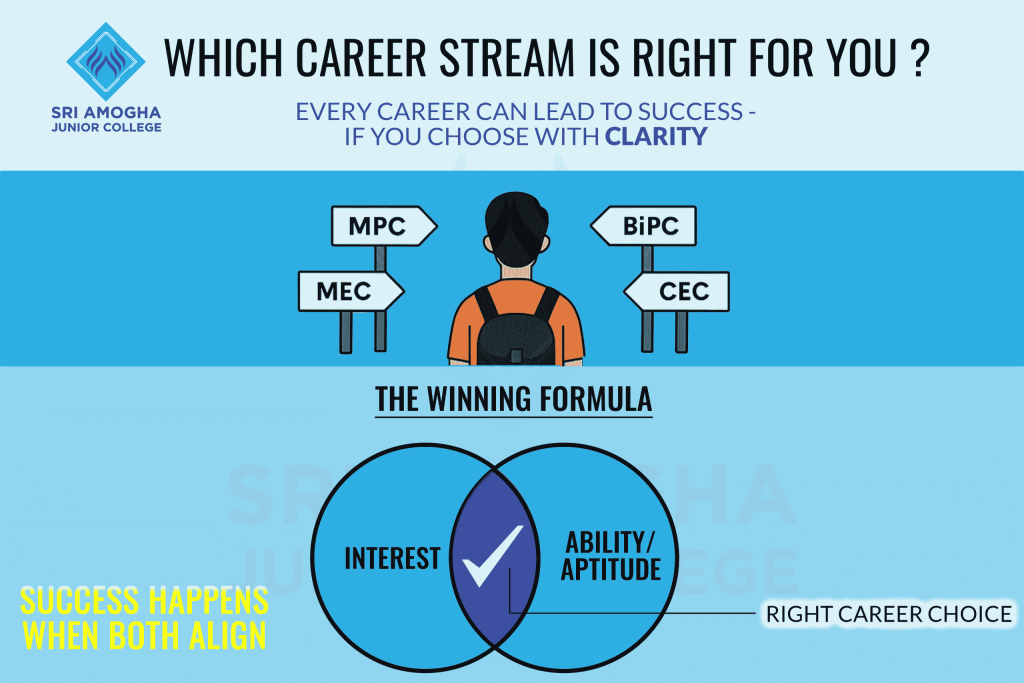
Table of Contents
ToggleIntroduction
- Choosing the right course after 10th is an important step that influences a student’s future education and career options.
- With multiple streams such as science, commerce, arts, and skill-based courses available, many students and parents feel confused about which course is best after 10th.
- After Class 10, the decision should not be based only on trends or peer pressure.
- Factors like personal interest, academic ability, and future career scope play a key role in selecting the right path.
- Each stream offers different opportunities, and the best choice depends on what suits the student’s strengths and goals.
- This guide explains the best courses after 10th across different streams and helps you understand after 10th which group is best for your future.
How Do Interest and Aptitude Help Decide the Best Course After 10th?
- Choosing the right course after 10th becomes easier when students clearly understand interest and aptitude. These two factors help in making a confident and practical decision.
1. What Is Interest?
Interest refers to subjects or activities you genuinely enjoy.
It reflects what excites your curiosity and keeps you motivated.
Students interested in numbers and problem-solving may prefer mathematics or technical subjects.
Interest helps you stay engaged and committed to a course over time.
2. What Is Aptitude?
Aptitude is your natural ability to learn and perform well in a specific area.
It shows how easily you understand concepts or develop skills.
A student may have strong aptitude in science or math even if interest is moderate.
Aptitude helps you handle academic pressure and course difficulty.
3. Why Both Interest and Aptitude Matter
Interest keeps you motivated, while aptitude supports consistent performance.
High interest without aptitude can lead to academic struggles.
High aptitude without interest can reduce long-term motivation.
The best course after 10th is usually where both interest and aptitude align.
4. Simple Example to Understand
A student who enjoys mathematics but struggles with biology may find medical courses challenging.
Such a student may be better suited for engineering, data science, or analytical fields.
Another student who enjoys biology and performs well in it is more likely to succeed in medical-related courses.
5. How This Helps in Choosing the Right Course
Helps avoid choosing a course due to peer or social pressure.
Reduces the risk of changing streams later.
Improves academic performance and career satisfaction.
Supports better clarity on which course is best after 10th.

Which Science Course Is Best After 10th?
- Science is often considered one of the most popular streams after 10th because it offers diverse career opportunities in engineering, medicine, research, and emerging technology fields. However, the best science course after 10th depends on a student’s interest, aptitude, and long-term goals.
1. MPC (Mathematics, Physics, Chemistry)
Best suited for students who:
Enjoy mathematics, logical thinking, and problem-solving
Are interested in technology, design, or analytical careers
Can handle numerical and concept-based subjects
Career options after MPC:
Engineering (Mechanical, Civil, Electrical, Computer Science)
Architecture
Aviation (Commercial Pilot)
Data Science and Analytics
Scientific Research and Academia
Skills required:
Strong analytical and logical thinking
Problem-solving ability
Interest in technical and scientific concepts
2. BiPC (Biology, Physics, Chemistry)
Best suited for students who:
Have a strong interest in biology and life sciences
Are passionate about healthcare or medical fields
Can focus on theory-heavy and practical subjects
Career options after BiPC:
Doctor (MBBS and other medical courses)
Pharmacy
Biotechnology
Nursing and Allied Health Sciences
Medical and Life Science Research
Skills required:
Interest in biological sciences
Attention to detail and accuracy
Ability to understand complex scientific concepts
3. How to Decide Between MPC and BiPC
Choose MPC if your strengths lie in mathematics and analytical thinking.
Choose BiPC if you are more inclined toward biology and healthcare.
Avoid choosing science due to pressure; success depends on genuine interest and aptitude.
Science courses require consistent effort and conceptual understanding.
4. Is Science the Best Course After 10th for Everyone?
Science offers excellent long-term opportunities, but it is not suitable for every student.
Students should carefully evaluate academic ability and interest before choosing science.
Other streams like commerce and arts also offer strong and rewarding career paths.
How to Choose the Right Course After 10th for a Successful Career
- Choosing the right course after 10th is not about following trends or comparing careers blindly.
- Every stream offers opportunities when students choose based on clarity, interest, and consistent effort.
- Understanding this perspective helps reduce fear and confusion while planning the future.
Key Takeaways from the Video
Every career path can lead to success when chosen with the right mindset.
Commitment to learning matters more than opting for a course based on popularity.
Long-term growth depends on effort, learning, and consistency.
Students should focus on building skills rather than fearing the future.
Clear guidance helps students unlock their full potential.
This video explains that success is achievable in every stream when students choose a course aligned with their interests and focus on consistent learning and growth.
Which Commerce Course Is Best After 10th?
Commerce is an ideal stream for students who are interested in business, finance, economics, management, and law. It offers strong career opportunities in both professional and corporate sectors and does not require the intense technical focus of science subjects. The best commerce course after 10th depends on a student’s interest in numbers, analysis, communication, and decision-making.
MEC (Mathematics, Economics, Commerce)
MEC is suitable for students who enjoy working with numbers and understanding how businesses and economies function. It provides a strong foundation for careers in finance, accounting, and management.
Who should choose MEC:
Students comfortable with mathematics and data analysis
Those interested in finance, economics, or business studies
Students planning to pursue professional or management careers
Career opportunities after MEC:
Chartered Accountant (CA)
Company Secretary (CS)
Economist
Business and Management Roles
Skills required:
Analytical and numerical ability
Financial and economic understanding
Logical thinking and problem-solving
CEC (Civics, Economics, Commerce)
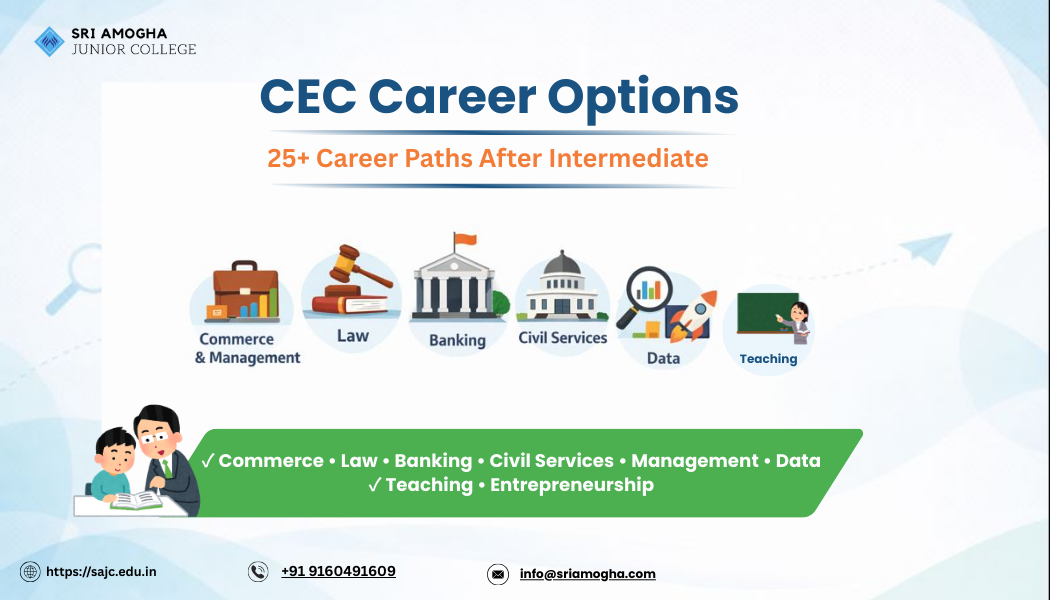
- CEC is suitable for students who are interested in law, governance, public administration, and communication-based careers. It is also a popular choice for students aiming for civil services and legal professions.
Who should choose CEC:
Students interested in law, politics, and public affairs
Those with strong reading, writing, and communication skills
Students planning careers in government or social sectors
Career opportunities after CEC:
Law
Civil Services
Journalism and Media
Public Administration
Economics and Policy-related roles
Skills required:
Strong communication and writing skills
Critical thinking and reasoning ability
Interest in social and political systems
Is Commerce the Best Course After 10th for Everyone?
Commerce offers excellent career growth, but it is best suited for students who have an interest in business-oriented subjects. Success in commerce depends on analytical thinking, consistent learning, and clarity about long-term goals. Students should choose commerce based on aptitude and interest rather than trends or peer pressure.
Which Arts Course Is Best After 10th?
Arts is a suitable stream for students who are interested in humanities, social sciences, communication, creativity, and public service. It offers flexibility in subject choices and opens doors to careers in civil services, education, media, design, psychology, and social sectors. The best arts course after 10th depends on a student’s interest in theory-based learning, critical thinking, and creative expression.
Humanities and Social Sciences
This option is ideal for students who enjoy subjects related to society, history, politics, and human behavior. It provides a strong foundation for higher studies and competitive examinations.
Who should choose Humanities:
Students interested in reading, analysis, and discussion
Those aiming for civil services or academic careers
Students who prefer theory-based subjects
Career opportunities:
Civil Services
Teaching and Academia
Social Research
Public Policy and Administration
Higher studies in humanities and social sciences
Journalism and Mass Communication
This course is suitable for students who enjoy writing, storytelling, and media-related work. It combines creativity with communication skills.
Who should choose this path:
Students with strong communication skills
Those interested in media, news, and digital platforms
Creative thinkers and storytellers
Career opportunities:
Media and Broadcasting
Content Writing
Public Relations
Digital Media Roles
Psychology
Psychology is ideal for students interested in understanding human behavior, emotions, and mental processes. It is a growing field with applications in healthcare, education, and corporate sectors.
Career opportunities:
Counseling and Mental Health Services
Clinical and Educational Psychology
Human Resources
Creative and Design-Oriented Fields
Arts also opens pathways to creative careers that combine imagination with practical skills.
Popular creative options:
Graphic Design
Animation
Fine Arts
Fashion and Interior Design
These fields are suitable for students who prefer hands-on learning and creative expression.
Is Arts the Best Course After 10th for Everyone?
Arts offers strong career opportunities, but it is best suited for students who enjoy conceptual learning, communication, and creativity. Success in arts depends on skill development, continuous learning, and choosing a specialization aligned with personal interests.
Other Career-Oriented Courses After 10th
Not all students prefer traditional academic streams like science, commerce, or arts. Many career-oriented and skill-based courses after 10th offer practical learning, quicker entry into the job market, and strong career potential. These options are ideal for students who want hands-on experience or wish to build industry-ready skills early.
Vocational and Skill-Based Courses
Vocational courses focus on practical skills and job-oriented training. They are suitable for students who want to start working sooner or gain specialized expertise.
Popular vocational options after 10th include:
Hospitality and Hotel Management
Travel and Tourism
Event Management
Retail and Supply Chain Management
Technical and trade-based skill programs
These courses help students develop industry-specific skills and often include internships or practical training.
Creative and Digital Career Courses
Vocational courses focus on practical skills and job-oriented training. They are suitable for students who want to start working sooner or gain specialized expertise.
Popular creative and digital courses include:
Digital Marketing
Graphic Designing
Animation and Multimedia
Content Creation and Media Design
These fields are suitable for students who are creative, tech-friendly, and interested in digital tools and platforms.
Professional Certification and Short-Term Courses
Short-term certification courses offer focused training in specific skill areas and are ideal for students seeking early career exposure.
Examples include:
Computer and IT-related certifications
Business and management skill programs
Design and software tools training
Such courses allow students to explore career interests before committing to long-term education paths.
Are Career-Oriented Courses a Good Choice After 10th?
Career-oriented courses can be an excellent choice for students who prefer practical learning and skill development. Success in these paths depends on choosing the right course, staying updated with industry trends, and continuously improving skills. When selected wisely, these courses can lead to stable careers and growth opportunities.
FAQs – Which Course Is Best After 10th?
1. Which course is best after 10th for a successful career?
There is no single best course after 10th for everyone. The right course depends on a student’s interests, academic strengths, and long-term career goals. Science, commerce, arts, and skill-based courses all offer good opportunities when chosen wisely and pursued with consistent effort.
2. Is science compulsory to build a good career after 10th?
- No, science is not compulsory for a successful career. While science offers strong opportunities, commerce, arts, and vocational courses also provide excellent career paths. Many students build successful careers in business, law, media, design, and public services without choosing science.
3. Which science course is best after 10th – MPC or BiPC?
- MPC is suitable for students who are strong in mathematics and interested in engineering or technical fields. BiPC is ideal for students interested in biology, medicine, and healthcare. The best choice depends on individual aptitude and interest.
4. Which commerce course is best after 10th?
- MEC is a good choice for students interested in finance, accounting, and management, while CEC is suitable for students inclined toward law, civil services, and public administration. Both streams offer strong career prospects when aligned with a student’s strengths.
5. Can average students choose science after 10th?
- Yes, average students can choose science if they have genuine interest and are willing to put in consistent effort. However, science requires strong conceptual understanding and regular practice, so students should evaluate their aptitude honestly before choosing this stream.
6. Is arts a good option after 10th?
- Yes, arts is a good option for students interested in humanities, social sciences, communication, creativity, and civil services. Arts offers flexible subject choices and career opportunities in education, media, public service, and creative industries.
7. Are vocational or skill-based courses good after 10th?
- Vocational and skill-based courses are a good choice for students who prefer practical learning and early career exposure. These courses focus on industry-relevant skills and can lead to employment opportunities or further specialization.
8. Which course after 10th offers early job opportunities?
Skill-based and vocational courses often provide quicker entry into the job market compared to traditional academic streams. Fields such as hospitality, digital skills, and technical trades can offer early employment opportunities with proper training.
9. What if I choose the wrong course after 10th?
Choosing the wrong course is not the end of the road. Many students change streams or career paths later through alternative courses, certifications, or higher education options. Early awareness and guidance can help minimize such situations.
10. How important is interest while choosing a course after 10th?
Interest plays a crucial role in long-term success. Choosing a course aligned with personal interest helps maintain motivation, improves learning outcomes, and increases the chances of career satisfaction over time.
11. Should future job demand be considered while choosing a course after 10th?
Yes, understanding future job trends is important. However, students should balance market demand with personal aptitude and interest. A course chosen only for trends may not lead to long-term satisfaction if it does not align with strengths.
12. Can every course after 10th lead to success?
Yes, every course can lead to success when chosen thoughtfully and pursued with dedication. Success depends more on skills, consistency, and continuous learning than on the stream selected.