
BiPC Career Options – Complete Career Guide for Students
Table of Contents
ToggleIntroduction
BiPC opens up diverse career opportunities in medical, life sciences, and healthcare-related fields. While many students associate BiPC mainly with clinical medical careers, the scope of BiPC extends far beyond that.
Key points BiPC students should know:
BiPC career options include medical, research-oriented, and applied science roles.
Careers in biotechnology, pharmaceutical sciences, agriculture, and environmental studies are increasingly popular among BiPC students.
BiPC is not limited to MBBS or BDS; several non-clinical and research-focused paths are available.
Many BiPC career options do not require highly competitive entrance exams like NEET.
Career growth in life sciences and healthcare innovation continues to expand globally.
Understanding these aspects helps BiPC students evaluate career paths that align with their interests, strengths, and long-term goals in science and technology.
Why BiPC Offers Strong Career Advantages
BiPC provides a solid academic foundation for students interested in life sciences, healthcare, and research-oriented careers. One of the key strengths of BiPC lies in the variety of professional paths it supports across multiple science-driven industries.
1. Career Flexibility Across Multiple Fields
BiPC allows students to explore diverse career paths rather than being restricted to a single domain. Students from a BiPC background can pursue opportunities in:
Medical and allied health sciences
Biotechnology and pharmaceutical research
Agriculture and environmental studies
Laboratory-based and research-focused roles
This flexibility enables BiPC students to align their careers with evolving interests, whether in clinical practice, research, or applied sciences.
2. Growing Demand for BiPC-Related Professionals
Industries linked to BiPC continue to expand due to advancements in healthcare, life sciences, and biotechnology. Careers in areas such as:
Healthcare services
Pharmaceutical sciences
Genetic and biomedical research
Laboratory and diagnostic technologies
remain in demand as science and healthcare systems evolve. This demand creates stable and long-term career opportunities for BiPC students across both public and private sectors.
3. Career Opportunities Beyond Clinical Medicine
Although BiPC is commonly associated with medical professions, it also supports careers outside direct clinical practice. Students can build careers in:
Environmental science and conservation
Agricultural research and food sciences
Biotechnology and bioinformatics
Healthcare technology and applied research
These fields are particularly suitable for students interested in innovation, sustainability, and science-driven problem solving.
4. Alignment with Life Science Career Goals
BiPC is particularly suitable for students who are interested in biology-based subjects, healthcare, and research-oriented fields. The stream supports academic progression in life sciences, applied sciences, and interdisciplinary research, making it a strong choice for students aiming for science-driven careers with long-term relevance.

At a Glance: Major BiPC Career Paths
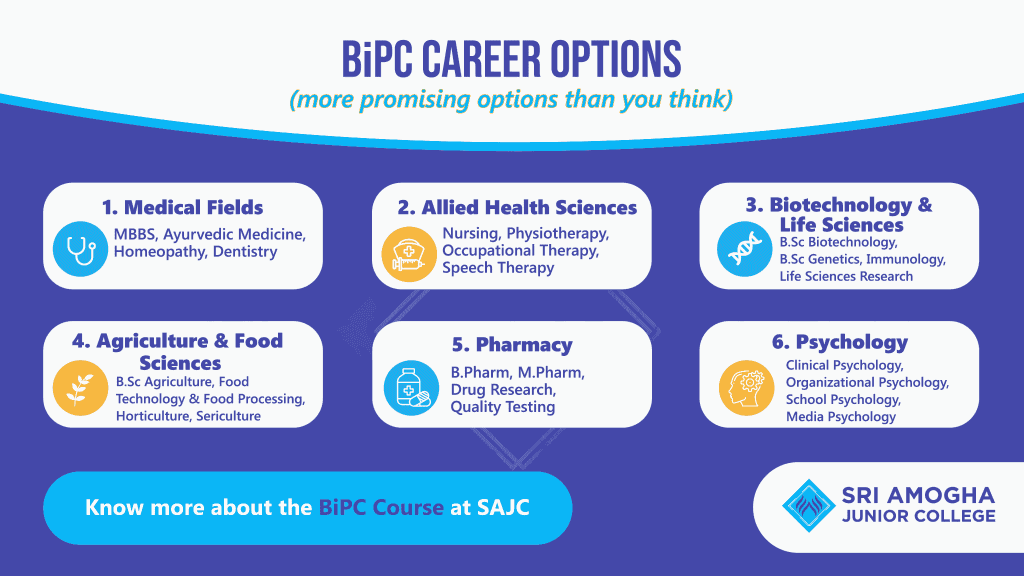
BiPC students can choose from a wide range of career paths across medical, healthcare, research, and applied science fields. The table below provides a high-level overview of common BiPC career options, along with the typical courses involved, general earning range, growth outlook, and key skills required. This snapshot helps students understand the scope of opportunities before exploring each career path in detail.
| Career Path | Common Courses | General Entry-Level Range* | Career Outlook | Key Skills |
|---|---|---|---|---|
| Medical Careers | MBBS, BDS, BHMS, BAMS | ₹6–12 LPA | Strong | Biology, Clinical Practice |
| Allied Health Sciences | Nursing, Physiotherapy | ₹3–7 LPA | Growing | Patient Care, Physical Fitness |
| Biotechnology | B.Sc Biotechnology, Genetics | ₹4–8 LPA | Strong | Research, Laboratory Skills |
| Agriculture & Food Science | B.Sc Agriculture, Food Technology | ₹3–6 LPA | Stable to Growing | Agricultural Knowledge, Analysis |
| Pharmacy | B.Pharm, M.Pharm | ₹4–7 LPA | Stable | Pharmaceutical Sciences |
| Psychology | B.A / B.Sc Psychology | ₹3–5 LPA | Growing | Communication, Counseling |
*Salary ranges are indicative and may vary based on specialization, location, and experience.
Medical Career Options in BiPC
Medical careers remain one of the most popular choices among BiPC students due to their direct connection with healthcare and patient care. Along with conventional medical degrees, BiPC also offers several alternative and allied medical career paths that suit students with different interests and professional goals.
- Below are some key medical career options available to students from a BiPC background.
1. BAMS (Bachelor of Ayurvedic Medicine and Surgery)
BAMS focuses on Ayurveda, a traditional system of medicine that emphasizes natural healing methods, herbal treatments, and lifestyle-based care. This career path is suitable for students interested in alternative and holistic healthcare practices.
Key highlights:
Undergraduate medical degree with clinical and practical training
Involves diagnosis, treatment, and preventive healthcare using Ayurvedic principles
Career opportunities include hospitals, wellness centers, research, and private practice
2. BHMS (Bachelor of Homeopathic Medicine and Surgery)
BHMS is based on homeopathy, a system of medicine that treats illnesses using natural substances in controlled doses. This option appeals to students interested in non-invasive and alternative medical treatments.
Key highlights:
Medical degree with training in homeopathic therapeutics and diagnosis
Opportunities in clinics, hospitals, research, and private consultation
Growing acceptance of natural and alternative healthcare systems
3. BDS (Bachelor of Dental Surgery)
Dentistry is a specialized medical field focused on oral health, dental care, and preventive treatment. BDS is a preferred option for BiPC students interested in healthcare with a focused clinical practice.
Key highlights:
Professional degree with strong clinical exposure
Career options include private clinics, hospitals, and specialized dental practice
Increasing awareness of oral and preventive healthcare supports long-term demand
4. BNYS (Bachelor of Naturopathy and Yogic Sciences)
management, and preventive healthcare. This medical path is suitable for BiPC students interested in non-invasive treatment methods and holistic health systems.
Key highlights:
Medical degree combining naturopathy, yoga therapy, and modern medical sciences
Focus on preventive healthcare, lifestyle correction, and natural treatment methods
Career opportunities in wellness centers, hospitals, research institutes, and private practice
Medical career options in BiPC extend beyond a single pathway and allow students to choose roles that align with their interests in healthcare, patient interaction, and clinical sciences.
Allied Health Sciences Career Options in BiPC
Allied Health Sciences offer rewarding career paths for BiPC students who wish to work in the healthcare sector without pursuing conventional medical degrees. These roles play an important part in patient care, rehabilitation, and long-term health management by supporting doctors and healthcare teams across different medical settings.
Below are some key allied health science career options available to BiPC students.
1. Nursing
Nursing is a vital part of the healthcare system and focuses on patient care, clinical assistance, and overall health management. It is well suited for BiPC students who are interested in direct patient interaction and long-term service in healthcare environments.
Key highlights:
Academic pathways include undergraduate and postgraduate nursing programs
Work environments include hospitals, clinics, community health centers, and specialty care units
Career growth through specialization in areas such as critical care, pediatric nursing, and mental health nursing
2. Physiotherapy
Physiotherapy focuses on rehabilitation, physical recovery, and improving mobility for patients affected by injuries, surgeries, or chronic health conditions. This field is ideal for BiPC students interested in physical health and therapeutic care.
Key highlights:
Requires professional education in physiotherapy and rehabilitation sciences
Involves patient evaluation, therapy planning, and recovery support
Career opportunities in hospitals, rehabilitation centers, sports medicine units, and wellness facilities
3. Speech and Language Therapy
Speech and language therapy helps individuals with speech, communication, and swallowing difficulties. This career path suits BiPC students who are interested in developmental care and patient-focused therapeutic support.
Key highlights:
Concentrates on speech development, communication challenges, and rehabilitation
Opportunities in hospitals, therapy centers, schools, and specialized clinics
Growing importance in pediatric and neurological care settings
4. Occupational Therapy
Occupational therapy supports individuals in rebuilding the abilities required for daily activities after injury, illness, or physical limitations through structured and practical rehabilitation.
Key highlights:
Helps individuals perform everyday tasks with greater independence and confidence
Work settings include hospitals, rehabilitation centers, and community care facilities
Suitable for students interested in long-term patient support and recovery planning
Allied Health Sciences provide BiPC students with meaningful career options that combine healthcare knowledge, patient care, and professional stability without the need for traditional medical degrees.
Biotechnology and Life Sciences Career Options in BiPC
Biotechnology and life sciences offer strong career opportunities for BiPC students interested in research, innovation, and science-driven problem solving. These fields play an important role in healthcare, agriculture, environmental sustainability, and scientific advancement, making them suitable for students who prefer analytical and laboratory-based work.
BiPC students can explore a wide range of careers within biotechnology and life sciences based on their academic interests and specialization.
1. Biotechnology Careers
Biotechnology focuses on applying biological knowledge to develop solutions in healthcare, agriculture, pharmaceuticals, and industrial processes. This field combines biology with technology and research-based applications.
Key highlights:
Career opportunities in biopharmaceuticals, genetic research, diagnostics, vaccine development, and bioinformatics
Work environments include research laboratories, pharmaceutical companies, biotech firms, and academic institutions
Suitable for students interested in laboratory research, experimentation, and innovation
Academic pathway:
Undergraduate degree in Biotechnology
Further specialization through postgraduate studies or research-focused programs
2. Life Sciences Careers
Life sciences cover a broad range of disciplines that study living organisms and biological processes. These careers are ideal for BiPC students interested in scientific research and applied biological studies.
Key highlights:
Opportunities in research, pharmaceuticals, healthcare sciences, agriculture, and environmental studies
Roles in laboratories, research institutions, universities, and industry-based research teams
Focus on advancing scientific understanding and practical biological applications
Academic pathway:
Undergraduate degree in Life Sciences or related biological sciences
Specialization in areas such as immunology, biochemistry, or molecular biology
3. Genetics and Genomic Sciences
Genetics focuses on the study of genes, heredity, and biological variation. This field supports advancements in healthcare, diagnostics, agriculture, and scientific research.
Key highlights:
Career options in genetic research, diagnostics, bioinformatics, and laboratory sciences
Opportunities in healthcare research, testing laboratories, and biotechnology organizations
Suitable for students interested in molecular biology and data-driven biological research
Academic pathway:
Undergraduate degree in Genetics or related life science disciplines
Advanced studies in genetics, genomics, or bioinformatics
Biotechnology and life sciences career options allow BiPC students to build science-focused careers that combine research, innovation, and real-world applications across healthcare, and environmental sciences.
Agriculture and Food Sciences Career Options in BiPC
Agriculture and food sciences provide strong career opportunities for BiPC students who are interested in sustainability, food systems, and applied biological sciences. These fields combine scientific knowledge with practical applications in farming, food production, and environmental management.
1. Agriculture
Agriculture-related careers focus on crop cultivation, soil management, farming technologies, and sustainable agricultural practices. This field is suitable for BiPC students who want to work closely with natural resources and food systems.
Key highlights:
Emphasis on crop science, soil health, and modern farming methods
Career opportunities in agri-business, agricultural research, farm management, and advisory services
Increasing importance due to the shift toward sustainable and technology-driven farming
Academic pathway:
Undergraduate degree in Agriculture
Further specialization in areas such as horticulture, organic farming, or agricultural biotechnology
2. Food Technology and Food Processing
Food technology focuses on enhancing food quality, safety, preservation, and production processes. This field integrates biology, chemistry, and technology to support the food industry.
Key highlights:
Opportunities include roles in food production operations, safety compliance, product innovation, and quality assessment
Employment in food manufacturing companies, research centers, and food innovation startups
Strong connection with sustainability and food security initiatives
Academic pathway:
Undergraduate degree in Food Technology or Food Processing
Advanced studies in food science or quality management
3. Horticulture
Horticulture focuses on growing and managing fruits, vegetables, flowers, and ornamental plants. This career path suits BiPC students who are interested in plant sciences and sustainable farming practices.
Key highlights:
Career options in garden management, landscape development, floriculture, and urban farming
Opportunities in research institutions, agricultural organizations, and green space development projects
Growing relevance in urban and sustainable agriculture models
Academic pathway:
Undergraduate degree in Horticulture or related plant science programs
4. Sericulture
Sericulture focuses on silk production and silkworm cultivation. It is a specialized agricultural field suited for students interested in niche farming areas linked with the textile industry.
Key highlights:
Career opportunities in silk farming, production management, research, and quality control
Roles in agricultural research centers and industry-supported programs
Alignment with sustainable and traditional agricultural practices
Academic pathway:
Undergraduate degree in Sericulture or related agricultural sciences
Pharmacy Career Options in BiPC
Pharmacy is a well-established and dependable career path for BiPC students interested in medicines, healthcare, and pharmaceutical sciences. This field focuses on the development, testing, production, and safe use of drugs and medical products.
Pharmacy careers are suitable for BiPC students who prefer science-oriented roles that combine biology, chemistry, and healthcare knowledge.
1. Pharmacy Education Pathways
BiPC students can enter the pharmaceutical sector through professional degree programs that build a strong foundation in drug science and healthcare applications.
Common academic pathways include:
Bachelor of Pharmacy (B.Pharm)
Master of Pharmacy (M.Pharm) for advanced specialization
These programs cover subjects such as pharmacology, pharmaceutical chemistry, drug formulation, quality assurance, and regulatory practices.
2. Career Opportunities in Pharmacy
Pharmacy graduates can work across different areas of the pharmaceutical and healthcare industry, depending on their specialization and interests.
Key career areas include:
Pharmaceutical manufacturing and production
Quality control and quality assurance
Research and development
Clinical and regulatory support roles
Pharmaceutical analysis and testing
Work environments include pharmaceutical companies, research laboratories, healthcare organizations, and regulatory institutions.
3. Scope for Specialization and Career Growth
With higher education and experience, pharmacy professionals can move into specialized and research-oriented roles. Advanced qualifications enable graduates to work on complex drug development processes, safety evaluation, and healthcare innovation.
Pharmacy remains relevant due to continuous advancements in medical science, biotechnology, and healthcare systems, making it a stable long-term career option for BiPC students.
Why Pharmacy Works Well for BiPC Students
Strong alignment with biology and chemistry subjects
Clear academic and professional progression pathways
Opportunities in both research-based and industry-focused roles
Suitable for students interested in healthcare without direct clinical practice
Psychology Career Options in BiPC
Psychology offers meaningful career opportunities for BiPC students interested in mental health, human behavior, and emotional well-being. As awareness around mental health continues to grow, psychology-related careers have become increasingly relevant across healthcare, education, and organizational settings.
BiPC students who prefer people-centric careers that involve assessment, counseling, and behavioral understanding can find psychology to be a suitable and impactful career path.
1. Clinical Psychology
Clinical psychology focuses on understanding, assessing, and supporting individuals dealing with mental health challenges. This field is suitable for students interested in therapeutic and counseling-based roles.
Key highlights:
Involves assessment, counseling, and psychological support
Work settings include hospitals, clinics, rehabilitation centers, and private practice
Requires strong interpersonal skills, empathy, and ethical practice
Academic pathway:
Undergraduate degree followed by postgraduate specialization in clinical or counseling psychology
2. Organizational Psychology
Organizational psychology applies psychological principles to workplace behavior, employee well-being, and organizational effectiveness. This career path suits BiPC students interested in combining psychology with corporate and professional environments.
Key highlights:
Focus on employee well-being, motivation, and workplace behavior
Opportunities in corporate organizations, consulting firms, and human resource teams
Involves research, assessment, and program development
Academic pathway:
Postgraduate specialization in organizational or industrial psychology
3. School Psychology
School psychology supports the emotional, behavioral, and learning needs of students. This field is ideal for BiPC students interested in working with children and adolescents in educational settings.
Key highlights:
Focus on student counseling, behavioral support, and learning development
Work environments include schools, educational institutions, and child guidance centers
Requires patience, communication skills, and child-focused counseling approaches
Academic pathway:
Postgraduate degree in school psychology or counseling psychology
4. Other Specialized Areas in Psychology
In addition to core psychology roles, BiPC students can explore specialized psychology fields based on further education and interests.
Other areas include:
Counseling and psychotherapy
Health psychology
Sports psychology
Forensic psychology
These areas often require additional training or specialization and are suitable for students interested in focused applications of psychology.
Psychology career options allow BiPC students to contribute to mental health, education, and organizational well-being while building people-focused professional careers grounded in science and behavioral understanding.
Sri Amogha Junior College’s CPMED Program for BiPC Students
- Sri Amogha Junior College offers the CPMED Comprehensive Program for Medical Entrance Preparation, designed specifically for BiPC students who aim to build strong foundations in life sciences and prepare for competitive entrance examinations.
- The CPMED program integrates core BiPC subjects—Biology, Physics, and Chemistry—with structured preparation for medical and life science entrance tests such as NEET and relevant state-level examinations. The academic approach focuses on concept clarity, syllabus alignment, and consistent practice to support long-term academic progress.
- Students enrolled in the CPMED program benefit from guided instruction, periodic assessments, and practice-based learning. Regular evaluations and feedback sessions help students identify learning gaps and improve their understanding of key concepts required for competitive exams.
- In addition to academic preparation, the program emphasizes overall student development through Sri Amogha Junior College’s SMART Curriculum. This framework supports balanced growth by addressing areas such as academic discipline, stress management, nutrition awareness, time management, and recreational engagement. The objective is to create a supportive learning environment that encourages both academic focus and personal well-being.
FAQs
1. What are the main career options available for BiPC students?
- BiPC students can pursue careers in medical fields, allied health sciences, biotechnology, life sciences, agriculture, pharmacy, psychology, and other research-oriented or applied science domains.
2. Is MBBS the only career option after choosing BiPC?
- No. While MBBS is a popular option, BiPC also offers alternative medical careers such as Ayurveda, Homeopathy, Dentistry, Naturopathy, as well as non-clinical paths in research, healthcare support, and life sciences.
3. Can BiPC students choose non-medical careers?
Yes. BiPC students can explore non-medical careers in biotechnology, life sciences, agriculture, food sciences, pharmacy, psychology, environmental studies, and research-based fields.
4. Do all BiPC career options require NEET?
No. NEET is required mainly for certain medical courses. Many BiPC career paths, including biotechnology, pharmacy, agriculture, psychology, and allied health sciences, follow different admission processes.
5. Is BiPC a good choice for students interested in research?
Yes. BiPC provides a strong foundation for careers in scientific research, including life sciences, genetics, biotechnology, agriculture research, and academic or laboratory-based roles.
6. What skills are important for success in BiPC-related careers?
Key skills include analytical thinking, subject understanding in biology and chemistry, consistency in studies, problem-solving ability, and interest in science-driven learning.
7. Can BiPC students pursue careers outside healthcare?
Yes. Apart from healthcare, BiPC students can work in agriculture, food technology, environmental science, research, education, and interdisciplinary science fields.
8. Is BiPC suitable for students who are unsure about becoming doctors?
Yes. BiPC is suitable for students who enjoy biology and life sciences, even if they do not plan to become doctors, as it offers multiple academic and professional pathways.
9. How can BiPC students prepare effectively for competitive exams?
Effective preparation includes strong subject fundamentals, regular practice, structured revision, mock tests, and guidance aligned with exam requirements and academic goals.
10. How should students choose the right career path after BiPC?
Students should consider their interests, strengths, academic performance, and long-term goals. Exploring different career options and seeking academic guidance can help in making informed decisions.