
Exam Preparation Tips for Intermediate Students
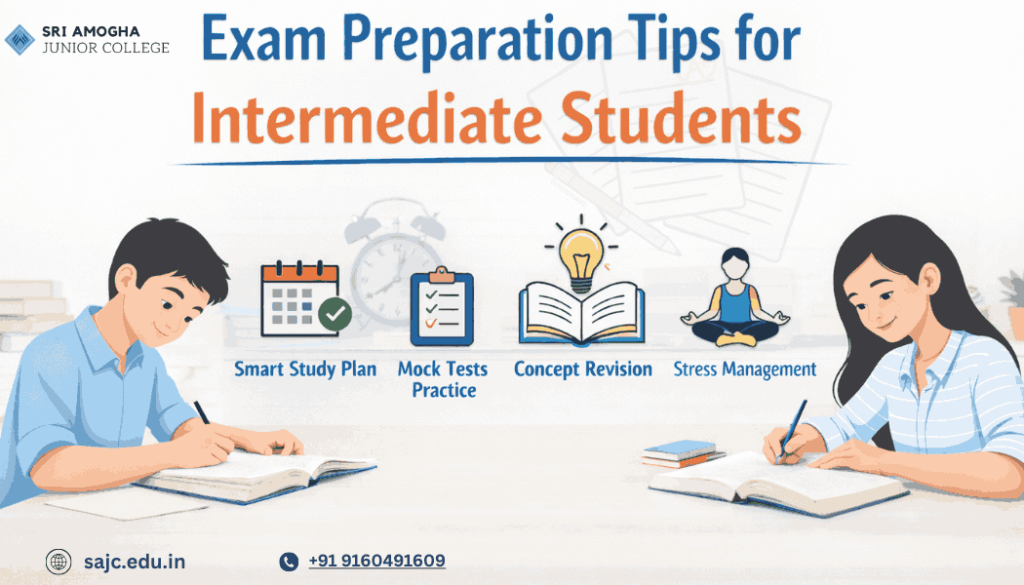
Table of Contents
ToggleExam Preparation Tips for Intermediate Students
Intermediate education is one of the most important phases in a student’s academic journey. Whether you are enrolled in MPC, BiPC, CEC, or MEC, these two years shape your career foundation and determine your performance in both board and entrance examinations.
If you are searching for exam preparation tips for students, especially at the intermediate level, this comprehensive guide is designed specifically for you. Unlike generic advice available online, this article focuses entirely on exam preparation tips for intermediate students, helping you succeed in board exams and competitive tests like engineering, medical, and commerce entrance exams.
Let’s explore the most effective exam preparation tips for students that will help you score above 95% and build long-term academic confidence.
Step-by-Step Exam Preparation Strategy for Intermediate Students
1. Build a Smart Study Plan
One of the most important exam preparation tips for students is creating a realistic study timetable.
How Many Hours Should Intermediate Students Study?
- 1st Year: 4–6 focused hours daily
- 2nd Year: 6–8 focused hours daily
- During revision phase: 8+ productive hours
Instead of studying continuously, use the Pomodoro Technique — study for 25 minutes and take a 5-minute break. This improves focus and reduces burnout.
Daily Study Routine for Intermediate Students
| Group | Subject | Study Time / Task |
|---|---|---|
| MPC | Mathematics | 2 Hours |
| Physics | 1.5 Hours | |
| Chemistry | 1.5 Hours | |
| BiPC | Biology | 2 Hours |
| Chemistry | 1.5 Hours | |
| Physics | 1.5 Hours | |
| CEC & MEC | Accountancy | Daily Practice |
| Economics | Concept Revision | |
| Business Studies | Theory Writing Practice |
Using Spaced Repetition ensures better long-term memory retention. This is one of the most scientifically proven exam preparation tips for intermediate students.
2. Focus on Concept Clarity
Many students memorize answers without understanding concepts. However, board and entrance exams test application-based knowledge.
Use:
- Active Recall
- Bloom’s Taxonomy
- Mind Mapping
- Concept-based learning

For MPC:
Understand derivations in Physics and step-by-step problem solving in Mathematics.
For BiPC:
Focus on diagrams, processes, and conceptual clarity in Biology.
For CEC & MEC:
Practice analytical thinking in Economics and accuracy in Accountancy.
Strong concepts are the backbone of effective exam preparation tips for students.
3. Subject Wise Preparation Strategy
| Subject / Stream | Preparation Tips |
|---|---|
| Physics Preparation Tips for Intermediate |
|
| Chemistry Exam Preparation Tips |
|
| Maths Problem Solving Techniques for Intermediate |
|
| Biology Preparation Strategy for Board Exams |
|
| Commerce Exam Preparation Tips (CEC & MEC) |
|
4. Practice with Mock Tests & Previous Papers
One of the most powerful exam preparation tips for Intermediate students is solving previous year question papers.
Benefits:
- Understand exam pattern
- Improve time management in 3-hour exam
- Learn how to attempt long answers effectively
- Identify weak areas
Mock tests simulate real exam conditions. For students preparing for JEE Main or NEET, weekly full length tests are essential.
5. How to Balance Board Exams and Entrance Exams
Many intermediate students ask:
“How to balance board exams and entrance exam preparation?”
Here’s the strategy:
- Focus on board syllabus concepts deeply
- Solve additional MCQs for entrance exams
- Allocate separate practice time for competitive tests
- Avoid studying entirely different topics simultaneously
This integrated approach is one of the smartest exam preparation tips for intermediate students.
Why Intermediate Years Are Crucial for Academic Success
Intermediate education builds the academic base required for higher education and professional courses. Students appear for board examinations conducted by institutions such as:
- Telangana State Board of Intermediate Education
- Andhra Pradesh Board of Intermediate Education
- Central Board of Secondary Education
At the same time, many students prepare for competitive exams like:
- JEE Main
- NEET
- EAMCET
This dual responsibility makes it essential to follow structured exam preparation tips for Intermediate students .
Intermediate students often struggle with:
- Lack of a study plan
- Time management issues
- Poor revision techniques
- Exam stress
- Balancing board exams and entrance exam preparation
The right exam preparation tips for intermediate students can completely transform your academic performance.
Time Management Tips for Intermediate Students
Time management determines your success.
Best productivity techniques:
- Prioritize difficult subjects in the morning
- Avoid mobile distractions
- Use task-based study blocks
- Take short breaks
- Sleep 7–8 hours
Mobile addiction control is extremely important. Keep your phone away during study sessions.
Strong time discipline is a fundamental part of successful exam preparation tips for intermediate students.
How to Improve Concentration During Study
Many intermediate students struggle with focus.
Try:
- Study in a distraction-free room
- Keep a fixed study desk
- Avoid multitasking
- Practice meditation or breathing exercises
Improving concentration enhances the effectiveness of all exam preparation tips for students.
Managing Exam Stress & Fear
Exam stress is common among intermediate students.
How to overcome exam fear:
- Start preparation early
- Avoid last minute panic
- Practice mock exams
- Maintain positive self-talk
- Exercise regularly
Stress management is not optional — it is a necessary part of modern exam preparation tips for intermediate students.
How to Write Answers in Intermediate Board Exams
Presentation matters.
Tips:
- Use headings and subheadings
- Draw neat diagrams
- Underline keywords
- Write step-by-step answers
- Manage time properly
Even average students can score above 95% by applying these smart exam preparation tips for students.
Quick Revision Strategy Table for Intermediate Students
To make your exam preparation tips for students more actionable, here is a simple and practical revision framework designed especially for intermediate students (MPC, BiPC, CEC, MEC).
| Study Activity | Frequency | Purpose |
|---|---|---|
| Concept Revision | Daily | Strengthen fundamentals |
| Previous Year Papers | 2–3 per week | Understand exam pattern |
| Mock Tests | Weekly | Improve time management |
| Formula / Key Points Review | Daily (15 mins) | Boost memory retention |
| Weak Topic Practice | Alternate Days | Improve score potential |
This structured table simplifies the most important exam preparation tips for intermediate students into an easy-to-follow system.
Exam Preparation Tips Final Thoughts
Intermediate education is not just about passing exams — it is about building a strong academic foundation for your future.
Whether you are a student of MPC, BiPC, CEC, or MEC, applying the right exam preparation tips for students can dramatically improve your results.
Remember:
- Plan smart
- Study consistently
- Revise regularly
- Practice mock tests
- Manage stress
- Believe in yourself
Following these structured exam preparation tips for intermediate students will help you excel in board examinations conducted by institutions like Telangana State Board of Intermediate Education and competitive exams such as JEE Main and NEET.
If you are looking for guided mentorship, structured academic planning, and integrated coaching for board and entrance exams, a supportive junior college environment can make a significant difference.
Your success begins with disciplined preparation and the right exam preparation tips for students applied consistently over time.
Frequently Asked Questions (FAQs)
1. How can intermediate students prepare effectively for board exams?
Students should start early, follow a structured timetable, focus on concept clarity, revise regularly, and solve previous year question papers. Writing practice and time-bound mock tests significantly improve performance.
2. How many hours should a 1st and 2nd year intermediate student study daily?
On average, 1st year students should study 4–6 focused hours daily, while 2nd year students may require 6–8 hours. The quality of study matters more than long, unproductive hours.
3. What is the best study timetable for MPC students?
MPC students should dedicate daily time to Mathematics problem-solving, Physics numerical practice, and Chemistry concept revision. Difficult subjects should be studied during peak concentration hours, usually in the morning.
4. How should BiPC students prepare for Biology and NEET simultaneously?
BiPC students should focus on strong conceptual understanding, diagram practice, and regular MCQ solving. Integrating board syllabus preparation with competitive-level questions helps manage both effectively.
5. Is one month enough to prepare for intermediate board exams?
Yes, if the syllabus is already covered. A focused 30-day revision plan including mock tests, weak topic revision, and formula practice can lead to strong results.
6. How can students improve concentration during study hours?
Studying in a distraction-free environment, limiting mobile usage, following fixed study blocks, and practicing breathing exercises can significantly improve focus.
7. How important are previous year question papers?
They are extremely important because they help students understand exam patterns, marking schemes, frequently asked questions, and time management strategies.
8. How can CEC and MEC students score high in Accountancy and Economics?
Regular problem-solving practice in Accountancy and conceptual clarity in Economics are essential. Writing structured answers with proper headings improves presentation scores.
9. How to manage stress during board examinations?
Maintaining proper sleep, eating healthy food, exercising regularly, and practicing mock exams can reduce anxiety. Avoid last-minute cramming and stay confident.
10. What are the best revision techniques for intermediate students?
Spaced repetition, active recall, short notes revision, and weekly self-testing are highly effective revision techniques for long-term retention.
11. How should students balance board exams and entrance exam preparation?
Focus on mastering the intermediate syllabus first, then practice additional MCQs for entrance exams. Since many concepts overlap, integrated preparation saves time.
12. How can students improve their answer presentation in theory exams?
Use headings, underline keywords, draw neat diagrams, write step-by-step answers, and maintain clean handwriting. Structured answers often receive higher marks.
13. How to overcome procrastination during exam season?
Break large tasks into smaller goals, use study timers, avoid social media during study hours, and track daily progress. Consistency eliminates procrastination.
14. What mistakes should intermediate students avoid during preparation?
Avoid skipping difficult topics, ignoring revision, depending only on last-minute study, and studying without a clear plan. Smart planning leads to better results.
15. How can students stay motivated throughout the academic year?
Setting clear goals, tracking improvement, celebrating small achievements, and seeking guidance from teachers or mentors helps maintain long-term motivation.