
SAJC resources
Why Some Students Learn in 2 Hours What Others Take 8
Sri Amogha Junior College · Updated 4 November 2026
By Nikhilesh Bharadwaj, Director, Sri Amogha Institutions
Every classroom has both kinds of students. One studies eight hours a day and still struggles to remember. Another studies two or three focused hours and does remarkably well.
Is it intelligence? Usually not. The difference lies in how they study and how they live around their studying. Learning isn’t about the hours you spend with a textbook. It’s about giving your brain the right conditions to take in, store and pull back information.
Here’s what is actually happening.
1. Your brain learns by building connections
Your brain has billions of nerve cells called neurons. When you learn something, connections between them form and strengthen. The more you use a connection, the stronger it gets.
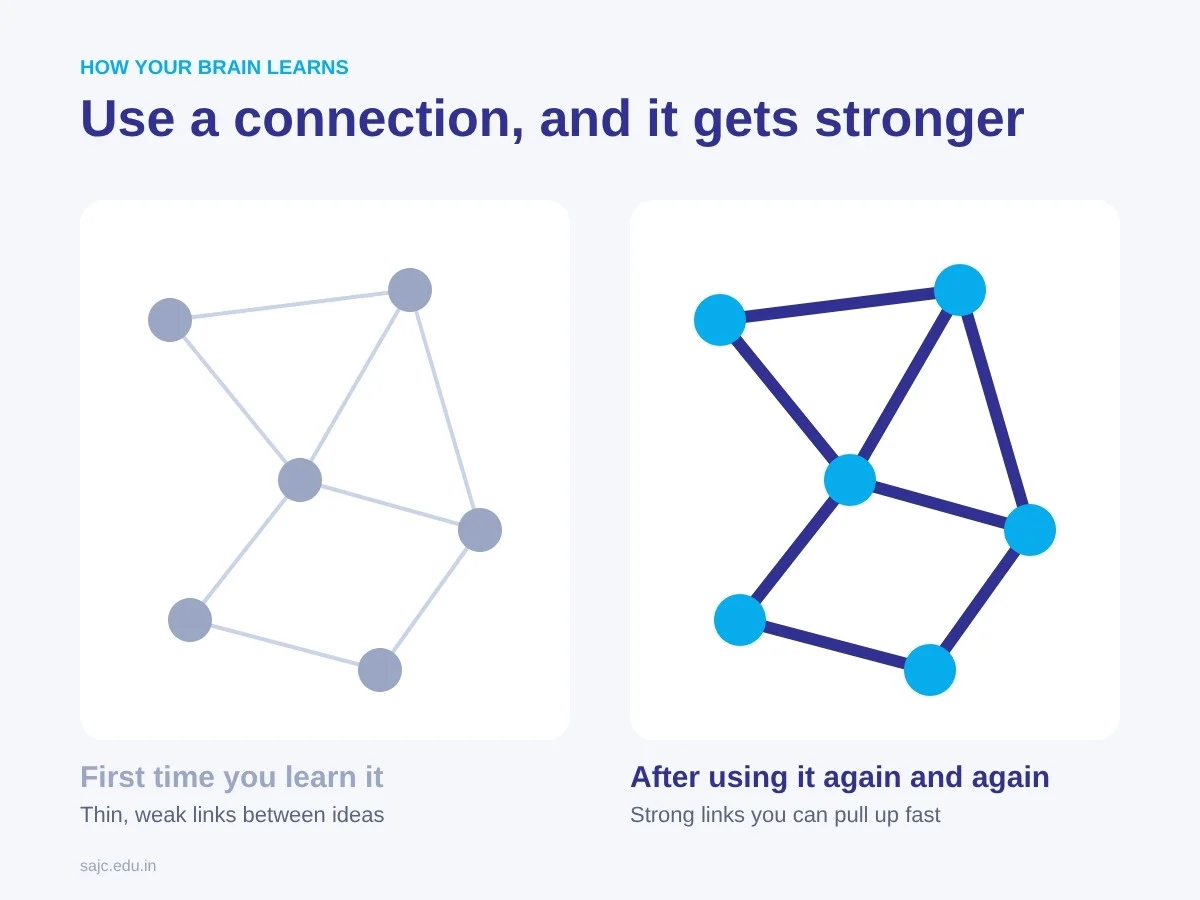
That’s why solving problems and explaining concepts builds learning far more than rereading. Learning isn’t pouring information in. It’s strengthening the links between ideas.
2. Forgetting is normal, and useful
Most students panic when a chapter fades after a few days. But forgetting is how memory works. The brain lets go of what it thinks isn’t important.
Every time you successfully recall something, you send a message: “This matters. Keep it.” So treat forgetting as a reminder to revise on a schedule, not a sign you’re bad at a subject.
3. Sleep is part of studying
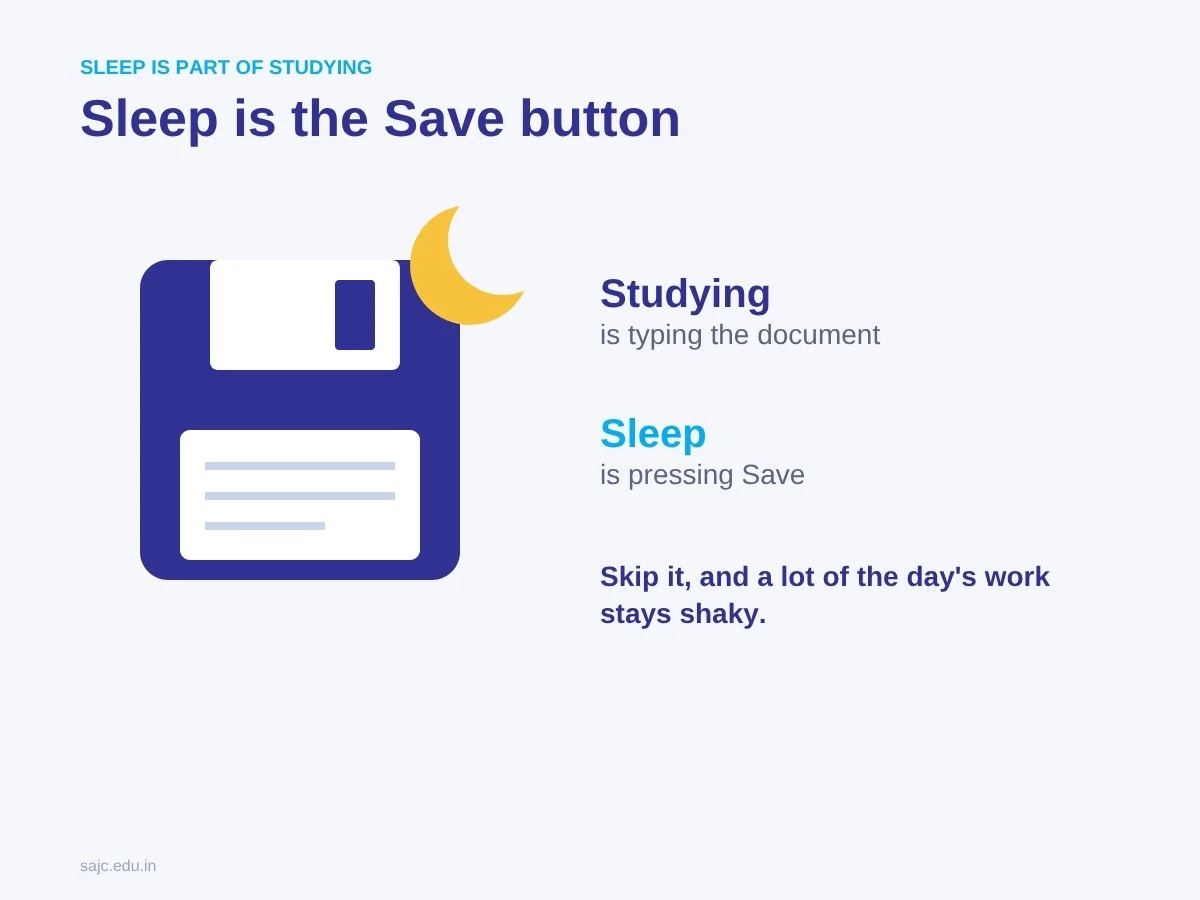
Students often cut sleep before exams, which is exactly when the brain needs it most. During sleep, the brain stabilises and organises what you learned during the day. Researchers call this memory consolidation.
If studying is typing a document, sleep is pressing “Save”. Skip it, and a lot of the day’s work stays shaky.
4. Retrieval beats repetition
Reading a chapter five times creates familiarity. Answering five questions from memory creates learning.
The brain gets stronger when it has to pull information out without looking. That’s why mock tests, quizzes and self-questioning work far better than endless reading.
5. Multitasking is a myth
Many students believe they can study while checking WhatsApp, listening to songs with lyrics, or scrolling between questions. The brain doesn’t truly do two demanding things at once. It switches back and forth, and each switch costs time and focus.
One hour of full attention usually gets more done than three distracted hours. The simplest fix: put the phone in another room, not just face-down.
6. A little stress helps. Too much doesn’t.
Some pressure keeps you alert. Too much makes it harder to concentrate, recall and avoid silly mistakes.
Aim for preparation, not perfection. Confidence comes from practice, not from worrying. Preparing for JEE or NEET? Read our guide to managing preparation stress. A short pause helps too, whether that’s a walk, a few minutes of breathing or yoga. At SAJC, students can take part in Medha Yoga as one way to slow down between study blocks.
The 8-hour day vs the 2-hour day
| The 8-hour student | The 2-hour student | |
|---|---|---|
| Method | Rereads and highlights | Closes the book and recalls |
| Phone | On the desk, buzzing | In another room |
| Breaks | Scrolling, long and unplanned | Short, planned, away from screens |
| Sleep | Cut short before tests | Protected, especially before tests |
| Revision | Once, just before exams | Spaced across weeks |
| Measures progress by | Hours spent | What they can now solve |

YouTube loads when you choose. Its privacy terms apply.
Key habits to take away
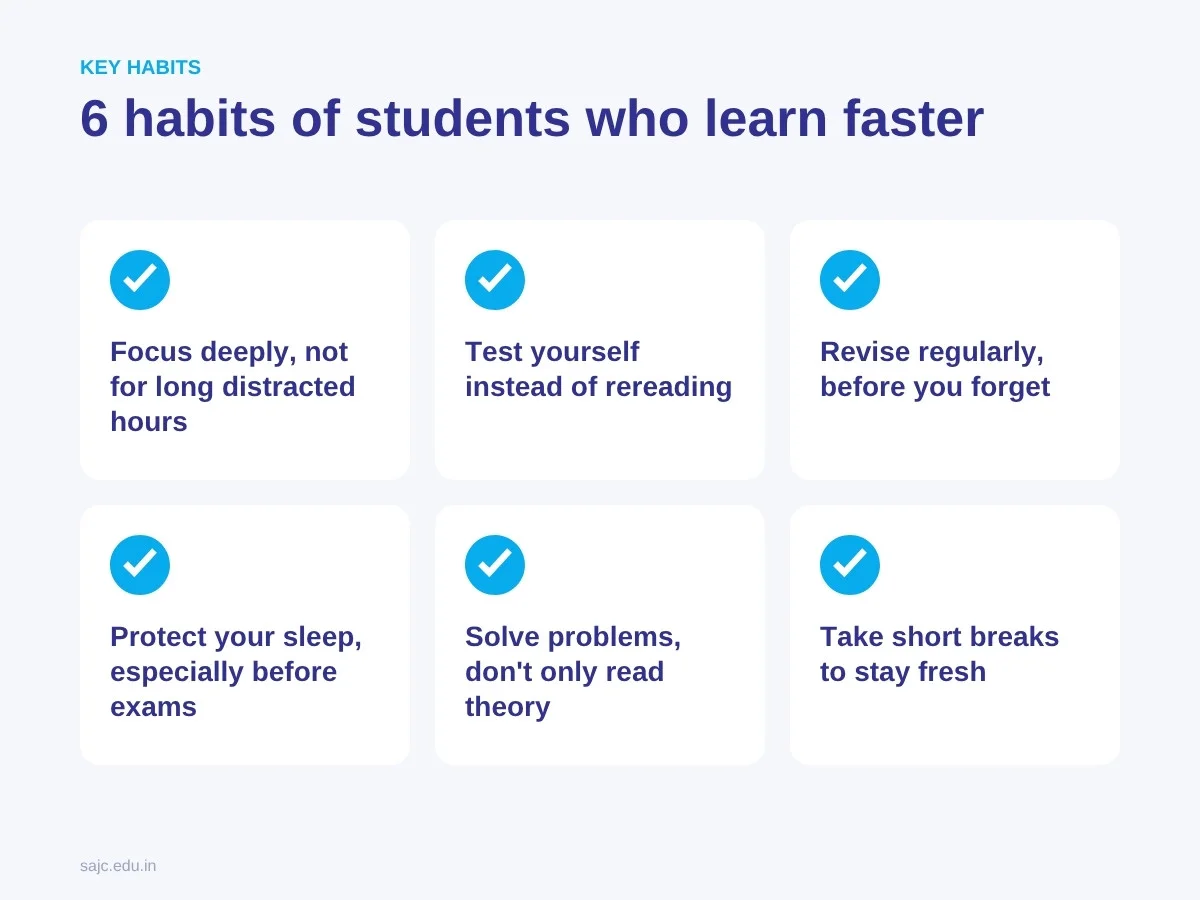
- Focus deeply instead of studying for long, distracted hours.
- Test yourself instead of rereading.
- Revise regularly, before you forget.
- Protect your sleep, especially before exams.
- Solve problems instead of only reading theory.
- Take short breaks to keep your concentration fresh.
Still unsure how many hours are “enough”? Watch our short video on study hours and marks.
Frequently asked questions
How can I learn faster as a student?
Test yourself instead of rereading, space out your revision, study with your phone out of reach and sleep on time. These four habits do more than adding hours.
Is studying 8 hours a day necessary for Intermediate?
Not by itself. Focused, active study for fewer hours often beats long passive sessions. What matters is what you can recall and solve at the end of the day.
Does sleep really affect exam performance?
Sleep helps the brain consolidate memory and keeps attention sharp. Regularly cutting sleep tends to leave students tired and less able to focus the next day.
The bottom line
Learning isn’t a race to log the most hours. Students who understand how their brain works, and build their day around it, usually learn more in less time.
Admissions for 2027–28 are open at Sri Amogha Junior College, SR Nagar. Not sure which stream fits? Talk it through with us before you decide. Book a career-counselling conversation · Download the brochure · See all courses
Explore IPNET, IPSET, IPMED and Classic Commerce at SAJC, or visit with your parent for a counselling conversation.
Explore courses Plan a counselling visit →