
SAJC resources
The Hidden Stress of JEE & NEET Preparation (and How Students Can Manage It)
Sri Amogha Junior College · Updated 4 November 2026
By Nikhilesh Bharadwaj, Director, Sri Amogha Institutions
JEE and NEET preparation is usually described in numbers: ranks, mock scores, study hours, competition. But behind those numbers is a teenager managing an intense routine alongside friendships, family expectations, sleep, growing up, and the pressure of deciding what comes next.
Academic support matters. So does knowing how to sustain that effort without wearing down a student’s mental and physical health. The goal isn’t to study less. It’s to study in a way that lasts.
When preparation starts taking a toll
A demanding schedule doesn’t automatically mean a student is struggling. Some stress is a normal response to an important challenge.
The concern begins when pressure becomes constant and starts affecting everyday life. Signs to watch for:
- Feeling exhausted even after rest
- Losing interest in things they used to enjoy
- Trouble concentrating
- Irritability or frequent mood swings
- Constant worry about tests, marks or rank
- Procrastinating despite wanting to study
- Changes in sleep or eating
- Feeling that no amount of studying is ever enough
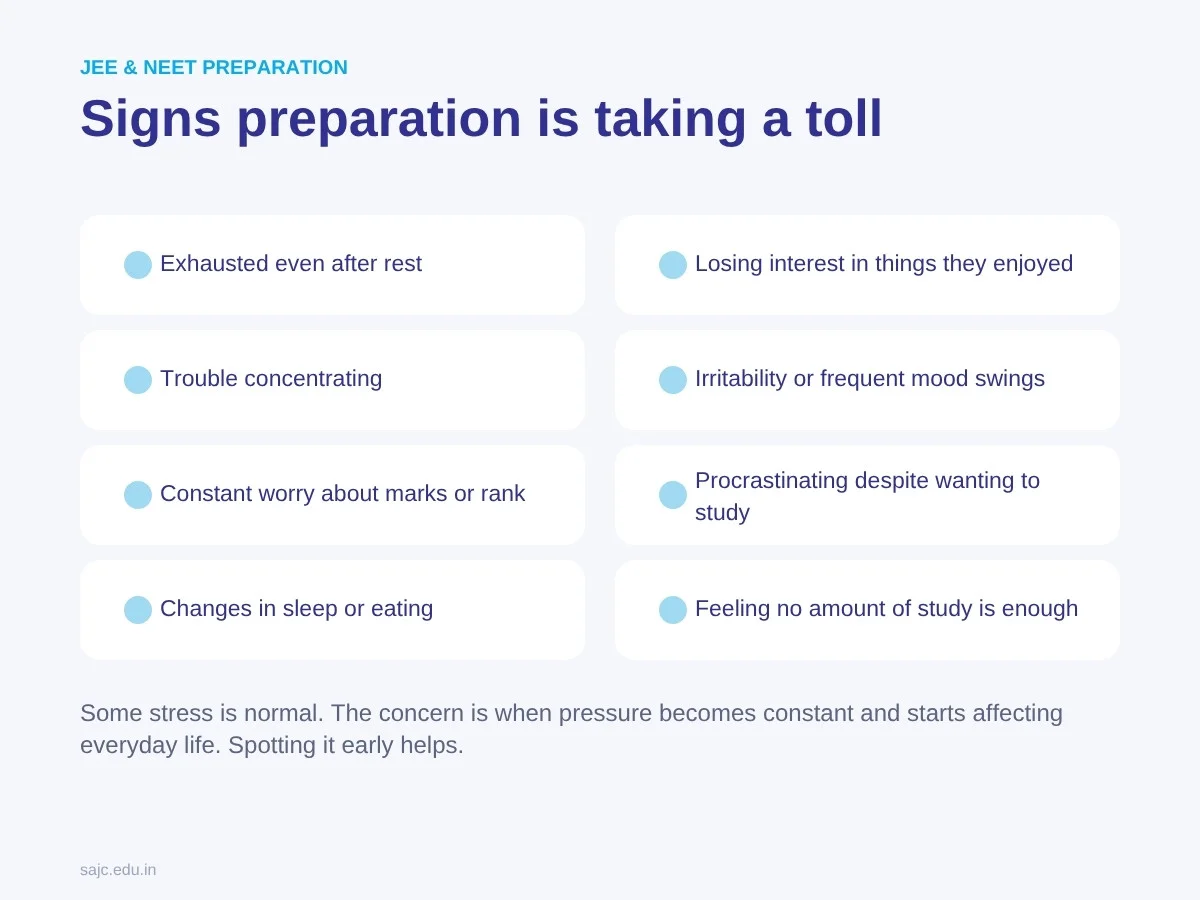
Research on JEE and NEET aspirants in India has linked high parental expectations with higher academic stress, which is why emotional support matters as much as academic support. Spotting these signs early lets students, parents and teachers respond before temporary pressure becomes overwhelming.
Does studying longer mean studying better?
It’s easy to equate long hours with hard work. Twelve hours looks more dedicated than eight. But when a student is tired, distracted or overloaded, adding hours often adds very little learning.
A sustainable plan isn’t built around maximum hours. It’s built around effective ones.
Why breaks and movement belong in the plan
For a JEE or NEET aspirant, a break can feel like wasted time. It isn’t.
The key difference is between a planned break and avoidance. A 20-minute walk or game that sends you back refreshed is very different from two hours of scrolling because you feel overwhelmed.
Physical activity deserves a place. Reviews of research in children and adolescents have found links between physical activity and attention, memory and academic outcomes, though the strength of evidence varies by study. Recreation isn’t the opposite of preparation. Done well, it’s part of a routine students can actually keep up.
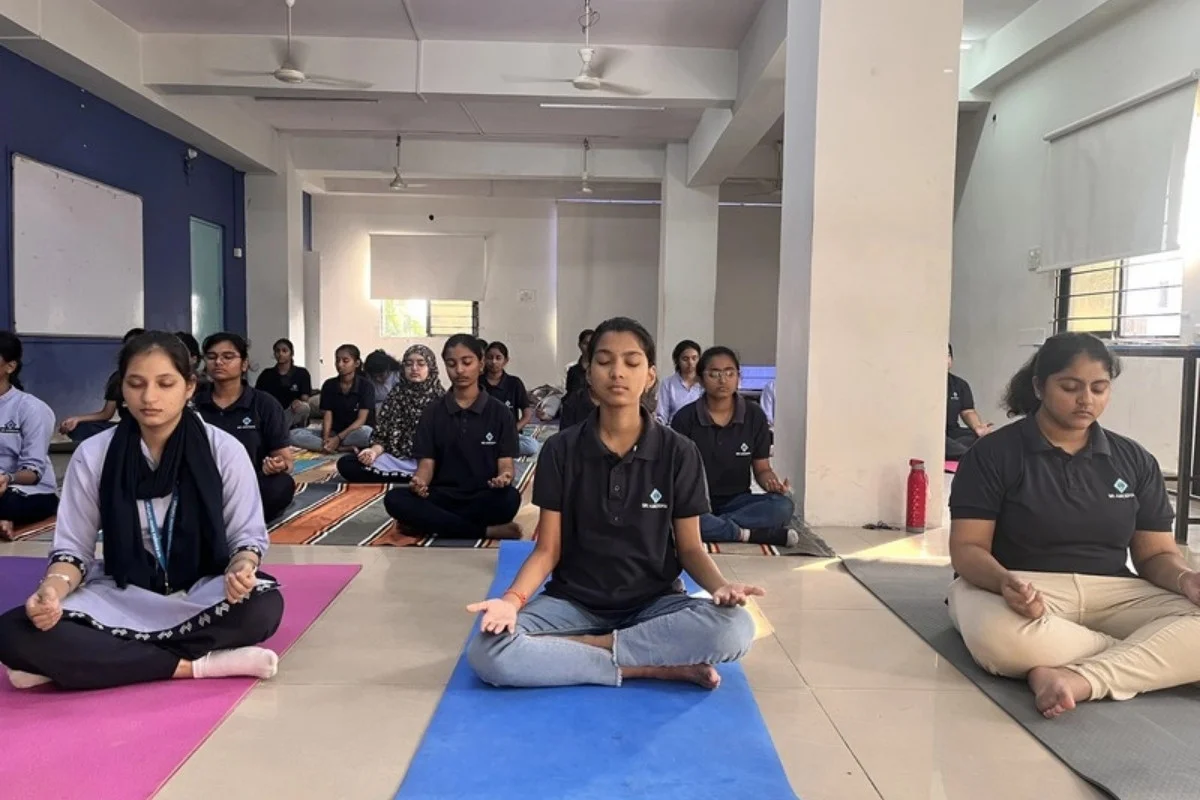
Can yoga help with academic pressure?
Yoga combines movement, breathing and attention. For students, it offers something a study timetable usually lacks: a deliberate moment to slow down. A 2024 review of mind-body practices in adolescents found that yoga in particular may ease symptoms of depression, although the studies were small and more research is needed.
Yoga isn’t a cure for anxiety or academic stress. But as part of a broader routine, it gives students a structured way to pause and refocus. At SAJC, students can take part in Medha Yoga, alongside their studies. It’s not a substitute for professional medical or mental-health care when that’s needed.

YouTube loads when you choose. Its privacy terms apply.
Sleep is not study time lost
“Just one more chapter.” “One more mock.” “I’ll sleep after this topic.”
Regularly cutting sleep leaves students tired and less able to concentrate the next day. Research links sleep with adolescents’ cognitive and mental wellbeing, though studies on sleep and marks directly are mixed. So we won’t claim more sleep guarantees higher marks.
The practical message is simpler: don’t make sleep the first thing you cut when the schedule gets tight.
Building a routine that lasts
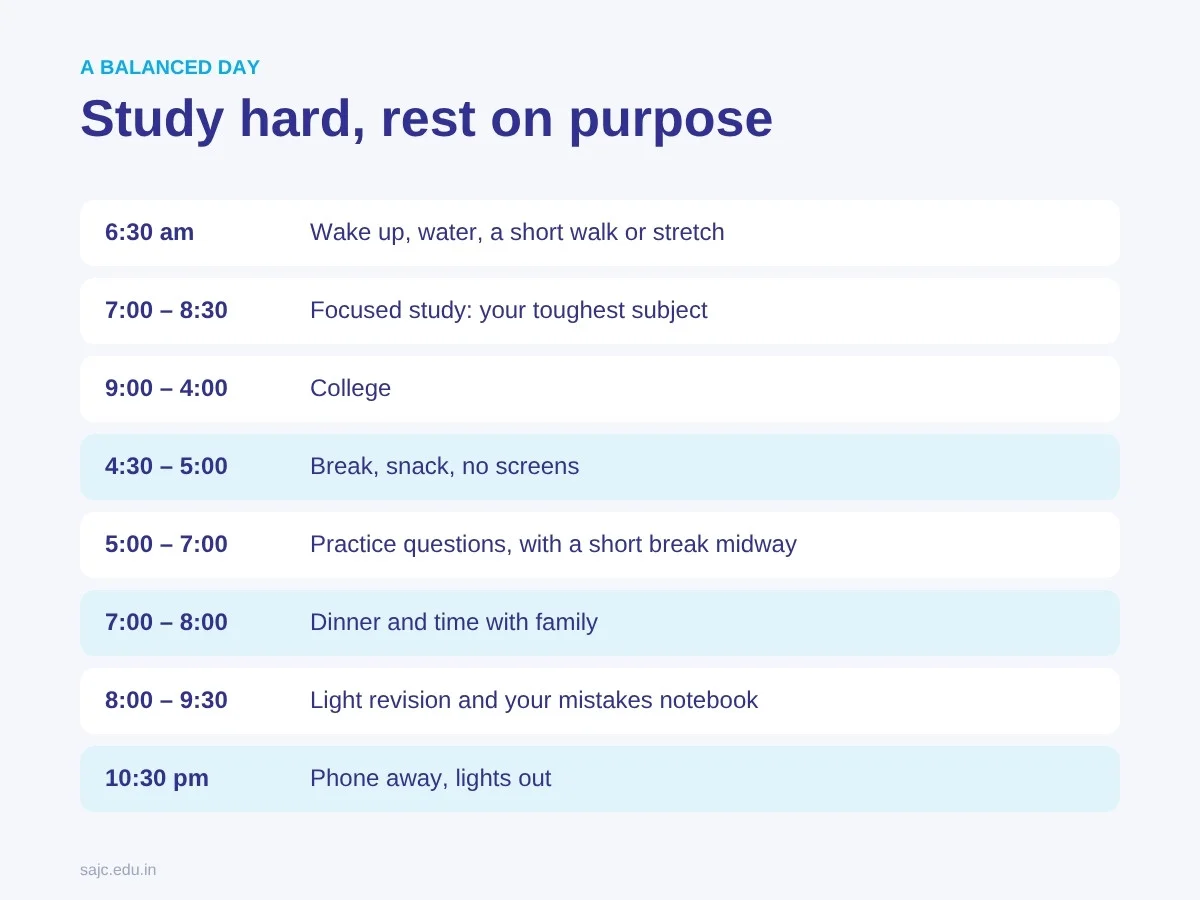
- Plan study blocks, not endless hours. Focused sessions with planned pauses.
- Schedule recreation. Don’t wait until you’re exhausted.
- Protect your sleep, especially in intense phases.
- Don’t make the phone your default break. Walk, stretch, talk to someone, step outside.
- Measure progress beyond hours. Ask: “What can I solve today that I couldn’t yesterday?”
- Talk when it’s too much. A parent, teacher, counsellor or mental-health professional can help.
For parents: what to say instead
| Instead of… | Try… |
|---|---|
| “How many hours did you study today?” | “What did you understand today that you didn’t yesterday?” |
| “Sharma aunty’s son got 99 percentile.” | “I can see how hard you’re working.” |
| “This exam decides your whole life.” | “This exam matters. It doesn’t decide your worth.” |
| “Stop wasting time, go study.” | “Take a proper break. Want to go for a walk?” |
| “Why did you score so low?” | “What tripped you up? Let’s look at it together.” |
We’ve also written about anxiety among teenagers for families who want to understand this better.
If it’s more than stress
If a student feels persistently low, hopeless or unable to cope, please reach out for support. In India, Tele-MANAS is a free, government mental-health helpline available 24×7: call 14416 or 1-800-891-4416. Students can also speak to a parent, teacher or doctor they trust.
You can read more about Tele-MANAS on Vikaspedia, the Government of India’s information portal.
Preparation should build a student, not just a rank
JEE and NEET will always demand discipline. There will be hard chapters, disappointing mocks and days when motivation disappears. But preparing for an entrance exam shouldn’t mean putting a whole life on pause.
A student who learns to manage time, handle pressure, take real breaks, sleep well and ask for help is building skills that last well beyond any entrance exam. That’s what balanced preparation means to us: academics at the centre, with room for movement, rest and wellbeing around it.
Frequently asked questions
How can students manage JEE and NEET stress?
Plan focused study blocks, schedule breaks and movement, protect sleep, keep the phone out of breaks and talk to someone when pressure builds.
Is it okay to take breaks during JEE or NEET preparation?
Yes. Planned breaks help students return focused. What hurts is unplanned avoidance, like long scrolling sessions.
What should parents avoid saying to JEE and NEET aspirants?
Comparisons with other children, “this decides your life” statements and measuring effort only by hours. Ask about learning and how they’re feeling instead.
Sources
- García-Hermoso et al. (2021), Effects of physical education interventions on cognition and academic performance outcomes in children and adolescents, British Journal of Sports Medicine.
- The effects of physical exercise on cognitive function in adolescents: a systematic review and meta-analysis (PubMed Central).
- Luo, Mei et al. (2024), Effects of mind–body therapies on depression among adolescents: a systematic review and network meta-analysis, Frontiers in Public Health.
- Musshafen et al. (2021), Associations between sleep and academic performance in US adolescents: a systematic review and meta-analysis.
- Biswas & Maji (2026), Parental expectations, academic stress and non-suicidal self-injury among NEET and JEE aspirants, Cambridge Prisms: Global Mental Health.
- Tele-MANAS (Vikaspedia, Government of India)
- CBSE asks schools to display the Tele-MANAS helpline (The Tribune)
Admissions for 2027–28 are open at Sri Amogha Junior College, SR Nagar. Not sure which stream fits? Talk it through with us before you decide. Book a career-counselling conversation · Download the brochure · See all courses
Explore IPNET, IPSET, IPMED and Classic Commerce at SAJC, or visit with your parent for a counselling conversation.
Explore courses Plan a counselling visit →